

35 years ago – on 14 February 1989 – Khomeini’s fatwa against Salman Rushdie was issued. A foreign leader instructed members of his religion world-wide to murder him because he had written a book which that leader claimed insulted his religion. After the initial outrage, some Labour politicians started rowing back, claiming that the reaction of Muslims here who supported the fatwa was understandable. It was an unprincipled, craven stance influenced by a desire not to offend Labour voters. Threatening the life and safety of a British citizen could be justified, if there were votes in it.
Politicians have usually been a bit more principled – or self-interested – when it comes to their own safety. When Stephen Timms was attacked by an Al Qaeda supporter, when Jo Cox was murdered by a man with links to far-right organisations strongly influenced by Nazi ideology, when David Amess was murdered by an Islamic State sympathiser, there was no attempt to try and appease their murderers and those thinking like them. There were endless expressions of how violence must not be allowed to influence our politics or our politicians. Rightly so. When Rosie Duffield spoke of intimidation she faced, leaving her afraid to attend Labour Conference, the Commons Speaker, Lindsay Hoyle, said this:
“Parliamentarians, who have been elected to speak up for their constituents, should be able to attend their own party conference without fear of harm. Too many people have been targeted for their opinion or the office they hold. In order to protect democracy, we need to ensure those participating can do so without threats of intimidation.“
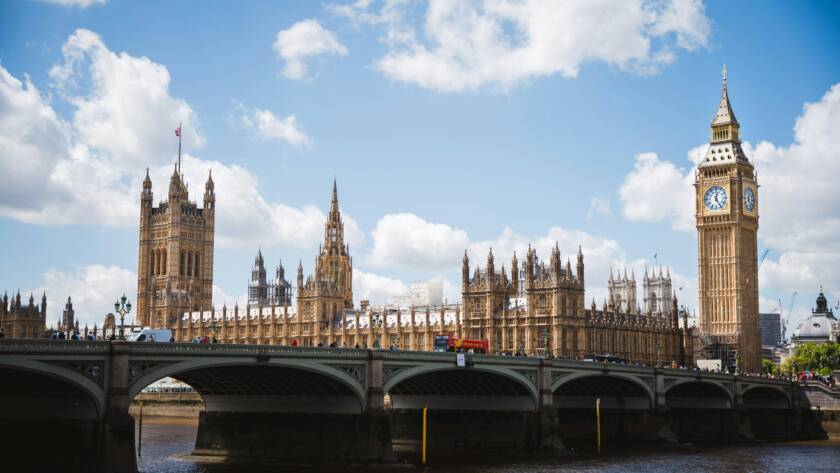
Indeed. A pity he forgot this when messing around on Wednesday night with Opposition amendments. The procedural niceties are irrelevant. What matters is that he chose to change Parliamentary procedures because of worries about threats, intimidation and possible violence by people massed outside Parliament and others against MPs, mainly it seems Labour ones. Rather than stand up to this, he caved in.
Starmer was silent about the intimidation of Rosie Duffield. Rather than condemn the intimidation his MPs have faced by those with pro-Palestinian views (death threats, damage to constituency offices, protests outside homes) he has left it to others – the Shadow Chancellor, the shadow crime prevention Minister, for instance. Starmer has limited himself to speaking about the fears for his family and the intense pressure on MPs.
There were claims that Labour had bullied the Speaker, though Starmer has now “categorically” denied this. What appears to have happened is that threats to MPs were used as emotional blackmail for political advantage, to improve his party’s standing with those making the threats. Starmer may have just wanted a motion allowing his MPs to vote with the party and their conscience. But by ignoring the threats of violence, by Hoyle admitting that these were a factor, a terrible signal has been sent out. Threats of violence work. This week, Parliament’s representatives made themselves complicit in terrorism directed at themselves, treating it as if it’s normal, as if it’s justified. There is a word for this: appeasement.
Threats of violence to obtain political change are not justified in a democracy. They should not be normal. They have been – for months now – out of cowardice, out of fear of being on the wrong side of an emotional argument over an issue about which this country can do little or nothing, out of a desire for votes. But no decent political party should want the votes of those who threaten our political representatives. It does not matter whether you are pro-Israel or anti-Zionist; it does not matter if you passionately dislike Netanyahu or think Hamas should be eliminated, no matter what; it does not matter if you simply worry about the human cost of Israel’s actions, how this will help the hostages and where this will all end; it does not matter if you don’t care about the issue at all. There has been little regard – and even less effective action – for members of the public made fearful, worried about their safety or targeted because of their religion. It should shame us as a country that in Britain in 2024 Jews should have to hide their identity in public or be told by the police to do so to avoid trouble, that they should have to pay for extra security, that there should be guards outside schools or places of worship or social centres.
What matters is that on Wednesday threats of violence were used to derail Parliament. The Labour MP, Ben Bradshaw stated the following day that MPs’ fears about violent retribution were a “perfectly legitimate” factor for the Speaker to take into account. If this really is Labour’s view, if Labour cannot see that threats and thuggery are the issue, Labour has a problem. We have a problem if Labour forms the next government.
On Thursday we learnt that Ministers have failed to take seriously advice they’ve received about tackling Islamist extremism, including clamping down on a Hamas support network in this country, thus putting the public at risk. Ministers ignoring advice and doing little about the matters they’re responsible for is hardly news. It would be a welcome surprise to learn that they have done something effective. Last week we learnt that anti-Semitic attacks in this country had risen to a 40-year high. An MP has said he won’t stand again because of threats by Islamists against him, his family and arson at his office. Even the recently elected Labour MP for Kingswood has been offered extra security because pro-Palestinian extremists abused him over his Israeli-born husband. Perhaps all these are related? Perhaps Parliament might turn its mind to these matters rather than childish arguments about procedural shenanigans over motions which will have no practical effect whatsoever? Perhaps Parliament might realise that appeasing the violent is neither an effective strategy nor a morally decent one?
This week has shown our political class at its worst. On Monday, a Business Minister whose aggrieved belligerence is only ever deployed in her defence and not for the victims of a miscarriage of justice by an organisation she is ultimately responsible for, got involved in a public spat – not just with its former Chair – but with one of the few MPs (Kevan Jones) who has been fighting hard for the subpostmasters for longer than she has been an MP. A former PM, whose only claim to fame will be her disastrous 49-day Premiership, decided to blame it on trans activists and green extremists, thus proving that life on the backbenches has not improved her grasp on reality. And the Defence Secretary has realised that this is a damp country which might explain why our missiles cannot launch from a submarine, which … er … spends its life in water. Maybe it was his idea of a joke.
It’s only Friday.
Photo by Jacob Diehl on Unsplash
