

1. In the space of 24 hours, four women survivors of grooming gangs resign from the Victims Panel because of concerns that its focus is being diluted. (The Panel was set up as part of the public inquiry announced in June into grooming gangs following the Casey audit).
2. One of those resigning accuses the Minister for Safeguarding and Violence Against Women and Girls, Jess Phillips, of lying about this in her statement to the Commons. She publishes the information supporting her accusation. Ms Phillips certainly looked like a Minister under stress when speaking in the Commons. Those four have stated that they will only rejoin if Ms Phillips is no longer involved. Another four have apparently said they want her to stay (though it seems they are not victims of grooming gangs but other forms of CSA, which has already been covered by the numerous IICSA Reports).
3. The Home Secretary issues a statement assuring everyone that the focus will not be diluted and the truth will be uncovered. This is repeated by the PM during PMQs.
4. Baroness Casey made an explicit recommendation in her audit that local authorities, police forces and related agencies “should be required not to delete evidence.” Self-evident you might think. But the recommendation was made because in her audit she had found names, dates and locations physically Tipp-Ex’d out of official documents relating to grooming cases.
As no Chair has been appointed, it appears that no formal notice requiring the retention of all relevant evidence and for none of it to be destroyed (other than what has almost certainly been destroyed or “lost” already) has been issued. Do not be surprised to find in due course that relevant material is not “available” and that this will be described as “regrettable”. The longer it takes to establish the inquiry formally the more opportunities there are for those with something to hide. It also means that evidence which might support prosecutions will not be available. There is every reason to suppose that those with an interest in avoiding accountability and/or prosecution will take advantage of this lapse.
5. Both of the candidates for Chair have withdrawn. The toxic nature of the topic, lack of confidence and political point scoring have been cited as reasons. Being its Chair is probably the equivalent of jumping naked into a bed of nettles. But in truth neither candidate was suitable – not because of their personal character – but because both had actual or potential conflicts of interest by virtue of their professions. Annie Hudson was an experienced social worker, though her time as Strategic Director, Children’s Services at Lambeth Council from 2016 might have proved a problem given the IICSA report on that council. Jim Gamble is an experienced police officer and former Head of CEOP (Child Exploitation and Online Protection).
How can a social worker or police officer head this inquiry?
- Ms Phillips admitted in the Commons on 2 September that she knew that the police had been involved –
“I would be lying if I said that over the years, I have not met girls who talk to me about how police were part of the perpetration, not just the cover up, and we need to make sure the victims can come and give that testimony.”
A number of police officers have been charged with sexual assault offences against grooming gang victims and investigations into other police officers are continuing.
7. The 2004 Bichard Inquiry Report (into police failings prior to Ian Huntley’s murders of Holly Wells and Jessica Chapman) set out the Chair’s concerns that –
“the issue of underage sex may not be taken sufficiently seriously by the police or social services generally”
and that –
“what causes most concern is when one of the parties is noticeably older, or has been ‘grooming’ the other, younger, party in some way. I note that this concern is reflected in the Sexual Offences Act 2003, now in force.”
The Report made a number of serious recommendations about what should be done when under-age children were involved in sexual activity; see pages 146-7 of the Report.
8. This was in 2004. Concerns were already being raised then about grooming gangs, notably by Labour MP, Ann Cryer. They were known by other Labour MPs, as Chris Mullin MP made clear in his diaries of the period. The responses to the concerns she raised are precisely some of the key issues in this inquiry.
- Did the authorities – such as the police and social services – not treat these concerns as they should have because of who the perpetrators were?
- Or because of who was raising the concerns and mistrust of their motives for doing so? Almost certainly. Ignoring the messenger – especially when the message is a difficult one – is a very common response to whistleblowers in pretty much all scandals. (Indeed, identifying that someone is a whistleblower is one of the first difficulties. It happens much less often than it should.)
- Were they fearful about how those perpetrators and the communities they came from might react?
- Did they fail to take sexual activity between adults and children seriously, despite this having been specifically raised as an issue in the Bichard Inquiry?
The conduct of these bodies will have to be scrutinised by the inquiry. The Chair’s impartiality and lack of bias – without even the remotest suggestion of an actual or potential conflict of interest – are essential if the inquiry’s findings are to have any chance of acceptance. And action on its recommendations.
(It is worth remembering that none of the IICSA recommendations made in its final report have been actioned and the current government cancelled a IICSA-recommended compensation scheme for victims in England and Wales on the grounds of expense.)
9. The search for a Chair continues and will likely not happen until next year. The Home Office has issued a statement of the bleeding obvious –
“This is an extremely sensitive topic and we have to take the time to appoint the best person suitable for the role.”
(This will not include a judge according to the PM. His explanation for why not makes no sense. Presumably all the retired judges are busy with other inquiries or will be washing their hair for the next few years.)
10. A word about meanings.
“Sensitive” means a topic which will likely result in criticism of politicians and public authorities and their motives for their actions.
“Extremely sensitive” means additionally one where the vast majority of victims are female, the perpetrators male, the latter will be outraged at having their behaviour to the former scrutinised and criticised, class, race and religion will need to be discussed and, oh, it was all so long ago, everyone was at it, why must women be so difficult, must we still really go on about it, no-one will come out of it well, there are more important topics etc.,. A good example of this very common whataboutery can be seen in Rory Stewart’s contribution to Newsnight on 22 October 2025 discussing Prince Andrew, as to whom see below.
11. What is also left unsaid – or, rather, discussed in a manner which generates much heat and little light – is the concern that many politicians have that uncovering what went on and why will (a) upset certain voters in particular constituencies; and (b) be used by their opponents to attack them. The former has, ironically enough, become more acute despite the government’s large majority because of the reduced majorities for many MPs in particular constituencies where the grooming gangs have operated and the fact that a number of independent MPs have explicitly downplayed this scandal and its religious/racial aspects, presumably because they are representing the views of many of their constituents. MPs fear confronting those constituents because they want their votes.
Whatever gloss is put on it, it comes down to cowardice. Politicians afraid of confronting and being honest about what has happened, why and their own role in this should not be allowed to avoid this by claiming that this is “political point scoring”. This is politics. If some voters or communities or organisations are unprepared to accept their role, their culpability, their responsibility or even the possibility that some of their number behave appallingly and do so because of the attitudes, values or apparent approval or indifference of their community (however misguided this perception may be), then it is the job of politicians to speak plainly to them.
12. They can start by pointing to the example of Ireland’s Catholic Church, which for decades had an iron grip over politicians, key public authorities and much social policy. It was seen as – and saw itself – as indispensable. It was, in effect, treated as a sacred caste whose priests and nuns were beyond criticism. Those doing so were shunned and/or forced to leave their jobs and, in some cases, their country. Eventually, the widespread and horrific abuse which was perpetrated under cover of this de facto impunity (as always happens whenever any group is treated as “sacred“, a “victim” or beyond challenge) came fully to light, as did the hierarchy’s hopelessly inadequate reaction: both to individual instances and the scale of the abuse. Cover up and denial were the responses. Action to put matters right was slow and taken far too late. The consequence is that the institution is largely discredited and faces the devil’s own job to restore the trust it once enjoyed and took for granted. It is no answer to this to say that not all priests and nuns behaved badly or that the criticism it has faced is unfair to them. It is precisely because a failure to address systemic problems is unfair to blameless individuals, as well as to victims, and to the positive contributions an organisation can make that honesty about the problems and effective action to address them are needed.
It is the job of politics to address – honestly and without fear or favour – what has gone wrong and how this might be put right. A failure to do so is not simply cowardice. It damages the trust there needs to be in institutions, in their honesty, in their willingness to correct mistakes, to learn from them, in the people running them, in the concepts of honesty and accountability which ought to inform the political process. It also continues the cruelty and callousness with which victims of these abuses of power are treated.
13. Separately, concerns have also been raised about grooming gangs operating in London, how this is being tackled by the Met and what the Mayor, who is also the Police Commissioner, knows about it. The denial has continued.
14. Baroness Casey has been silent on the topic since issuing her audit and the announcement of the public inquiry. Whether that silence is related to the rumours that she may be appointed Cabinet Secretary replacing Chris Wormald, who can say. If the rumours are true, she might want to look at the unhappy experience of Sue Gray before making her decision. The PM has said she will have oversight of the inquiry, though how she can do that and lead the independent review of adult social care (announced in July 2025) let alone anything else is also left unexplained.
15. Now some victims have stated that they will only stay on the victims’ panel if the relevant Minister remains, whereas others have said they will only return if she is removed from her post. It is really quite remarkable how the politicians’ failure to get a grip of this issue months ago and certainly in the time since the inquiry was announced has led to a position where the victims of abuse risk being blamed for the failures to progress the inquiry and where they are being pitted against each other. It echoes – ironically and darkly – what was said about the victims at the time: that they were somehow complicit in their own abuse because of their own behaviour. Or, to put it more crudely: let’s blame the women. A cynic might even think it suits the political class for the focus to be on arguments between groups of abused women instead of the authorities’ failures over a quarter of a century.
16. Still, there is always Prince Andrew to provide a distraction. Let’s not mention Jes Staley, the former Barclays CEO, who was recently banned from holding senior management roles in financial services for misleading the Barclays Board and the financial regulator about the extent of his relationship with Epstein, one which went back many years and was far closer than he claimed.
Unlike the prince, he is a highly intelligent and experienced individual who had a key role in charge of a major bank and with legal / regulatory obligations on his conduct. But like the prince, he has been arrogant, shown dreadful judgment and been misleading.
During his appeal against his banning, it emerged that he had had sex with an Epstein employee, a fact he complained about because it had caused difficulties with his wife (imagine!). The issues were about his honesty and transparency. There were no allegations about his involvement in Epstein’s non-financial activities. But when someone as apparently intelligent as him and others (hello, Lord Mandelson) can work so closely or be friendly with an Epstein, it is hardly surprising that someone as entitled and stupid as Andrew sees nothing wrong in doing so (though quite what palace courtiers whose job, presumably, is to save the royals from themselves thought they were doing letting him continue is a mystery). Plenty of people knew about Epstein, his activities and connections (he was introduced to Ghislaine Maxwell by her father, Robert) or could have found out by making some inquiries. No-one did – apparently – or if they did and knew, they did not care. Plenty of people were willing to turn a blind eye.
Perhaps the girls were simply invisible to them. Perhaps they believed that money has no smell. Well for a time it doesn’t. But eventually how you make money, the “services” it allows you to enjoy, from whom and who you associate with in order to make more money does smell. Badly. At which point, the authorities start saying that they do care very much indeed about the appalling stench caused by all the blind eye turning, though this is usually couched as concern about the victims. Some of the victims are understandably cynical about the sincerity of this concern.
Which brings us back to where this article started. But no further forward.
17. There are always three aspects to all scandals:-
- The original problem
- How that was handled – usually badly, which is why it becomes worse and spreads
- How the victims are treated. It is invariably this last which makes a scandal unconscionable.
So it is here. Some of the perpetrators have been convicted. This is no small thing. It is considerably more than what has happened in other scandals, where there was the potential for prosecutions but none occurred. It is those very prosecutions which have brought to light the reality of the horrors which were committed. Two murders in 2002 led to a public inquiry and significant changes to the vetting scheme for those working with children. The multiple prosecutions of men involved in grooming gangs deserve no less, as the Casey audit made clear. Politicians have accepted her recommendations but have since acted in a way which has suggested a reluctance to take it as seriously as it ought to be or a wish to downplay it or to lump it together with other forms of sexual abuse or to minimise the focus on the specific characteristics of this type of abuse, which have caused such understandable public concern.
This may be unfair. But that perception matters and should have played and be playing a greater role in determining the government’s actions. Why? It comes down to trust – to the job of repairing a trust which has been severely damaged, broken in some cases and put under considerable strain elsewhere.
18. In April 2024 I wrote this about the Post Office and other scandals –
“When you strip away the reports, the millions of documents, the interviews, the evidence, the court cases and judgments, the lawyers, the documentaries, the dramas, remember this. At the heart of all these scandals – whether in the police, the post office, the NHS, children’ s homes or elsewhere – are people (often vulnerable people) whose lives have been ruined, people who have been harmed, people who have suffered and whose suffering could and should have been stopped if only those who had the power and the responsibility to do so had paid attention to the clues waved under their noses and acted.
This failure to do so and the accompanying lies – by so many bodies from government down – has degraded trust in our public and private institutions. There is still far too much resistance and denial by those responsible for the problems. It will be quite the effort to rebuild that trust. There is little sign that the scale of the task or its overriding necessity are fully understood.”
The shenanigans around this inquiry suggest that this still holds true.
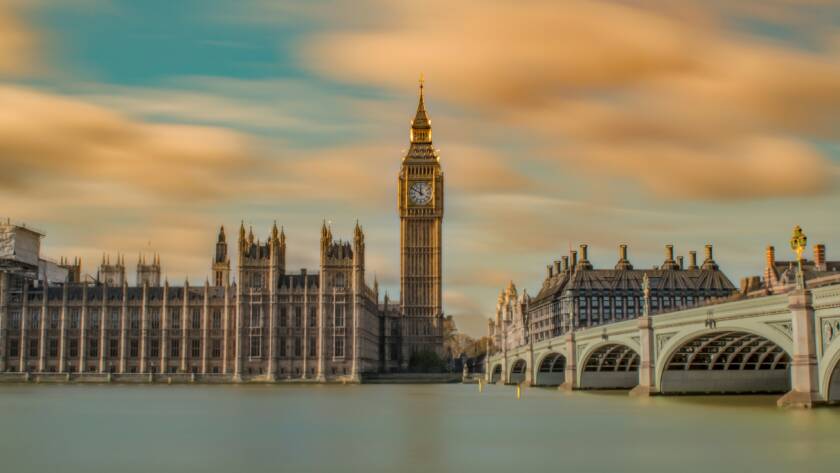
Photo by Massimiliano Morosinotto on Unsplash