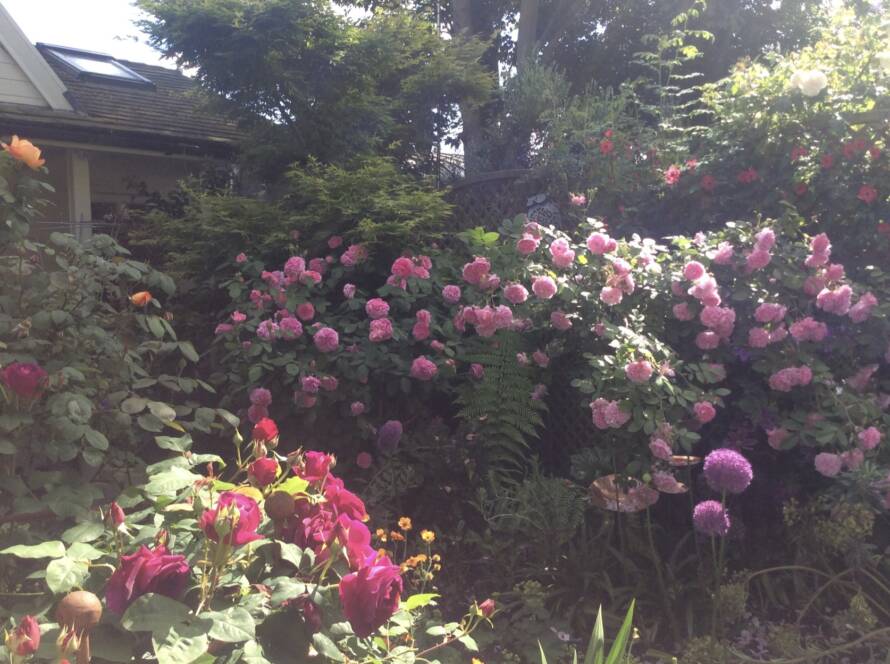


This week I became a character in a story that might have been written by Balzac and found myself part-owner of a work of national cultural importance.
It started with a beautifully written letter from a firm of genealogists working for the French government, complete with official stamps. They were writing to me as one of the heirs of my great-great-grandfather, André Adolphe Sala, Count Sala. A scam? No – the firm was genuine. One of the key details was wrong, however. There was a missing “great”. He was my great-great-great-grandfather. Tsk. Unlike many, I can trace my ancestors back very many generations because many of them are famous and so others have taken an interest and done all the hard work. I knew they were famous but growing up they were simply family characters, a source of stories, as everyone sooner or later was.
André Alphonse Saladduchin was born in Florence in 1802 later moving to Paris. His god-father was Ferdinand de Lesseps, the engineer who built the Suez Canal. André Sala wrote a book about the 1830 revolution which overthrew Charles IX and put his cousin, Louis-Philippe on the French throne – Dix Jours De 1830: Souvenirs de La Dernière Révolution. He was part of a corps of engineers who went to Egypt with de Lesseps, died and was buried there. His eldest child, Jeanne, was my grandmother’s grandmother: five generations of eldest children – all female. Jeanne married Alexandre Colonna Walewski, the French Consul-General to Turin (and son of the French-Jewish actress, Rachel Felix), had two children and died aged 35 in Palermo. But her eldest child – Madeleine, my great-grandmother, known by all as “Grand-mère” – lived to 86, dying only 3 years before my birth. She was very close to her father, who wrote a loving book to her on her marriage: a sort of guide to and advice on life. One day I must translate it.
Then came my grandmother – also called Jeanne, my mother and me. All formidable, fierce and, in the case of my mother and grand-mother, fiercely loving women with a zest for life and a sense of fun. Grand-mère was rather stricter and keen on the social proprieties. She did not get on particularly well with her daughter, was teased by her grand-children and, despite living with them, must have been a glowering family presence.
They were born into well off, socially respectable, aristocratic Franco-Italian families, with a keen sense of their place in the social structures of their day. As happened to so many, the expected rhythms of their lives were disrupted by tumultuous political changes, especially in France, wars, its privations and diseases. Social appearances and public conduct mattered but behind that there was much disgraceful misconduct: affairs, illegitimacy, an actress in the family and so on. Despite all the changes, when I was growing up with my grandparents in Italy, many of the rhythms of that 19th century/pre-WW2 life remained – clothes for “best”, afternoon tea with aged distant relatives, chamber pots next to the bed to avoid night-time walks down long draughty corridors to the bathroom, the children brought to the adults’ drawing room to be admired and cooed over and told how much they’d grown then sent back to the playroom to our relief and, I suspect, theirs, the silver polished for special occasions, a reverence for French culture, noisy arguments about current affairs, long-standing family quarrels and historical events as if all mattered equally and an admiration for Britain: tea, tailoring, tartan and novels by long-forgotten lady novelists later revived by the Virago Press. Their bookshelves were an eclectic mix: Radclyffe Hall’s “The Well of Loneliness” was mixed in with the Fables de La Fontaine, Hector Malot, Sorrell and Son and AJ Cronin. Pearl S Buck too. I read them all voraciously and the life described in 19th and early 20th century novels did not seem that unfamiliar.
Why is the French government writing to me?
A few years back, the descendants of a Parisian notary tried to sell the only remaining manuscript of Mémoires d’Outre-Tombe by François-René de Chateaubriand, the father of French romanticism and a key influence on Victor Hugo. (It had remained undisturbed in a notary’s safe for 180 years). The sale was stopped and after a lot of arguments between the descendants of the notary and the writer, the French government established that the manuscript belonged to a publishing house, one of whose partners was André Sala. How many engineers owned publishing houses then? Or now?
The letter went on: the French government wished to “acquire” the manuscript and needed the heirs’ permission to do so. There are many heirs: 8 from Jeanne Sala through her daughter – Grand-mère; another 10 through Grand-mère’s brother, André, and who knows how many from Jeanne Sala’s brother. He, Maurice, married (like so many aristocrats of his generation) an American – Emily Sanford – known to my mother and grandmother as Tante Sala. I have a portrait of her in old age when my mother would have known her: faded as it is and despite the damp spots, she was beautiful.
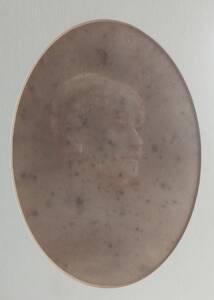
“Acquire”. What does that entail? A polite “merci” accompanied by the assurance of “sentiments les plus distinguées”? Filthy lucre? Who knows? The family tree and names of heirs will be sent to the Ministry of Culture who will then contact us. If they are all as argumentative as my family, the Ministry will be trying to herd cats. For my part, I look forward to a ceremony (I shall wear the bracelet André Sala bought for his daughter in Egypt, an entirely worthless example of Egyptian gift shop workmanship ca. 1860) where I will be presented with a cheque (a banker’s draft would be comme il faut) for some magnificently irrelevant sum which I can frame and hang next to Tante Sala.
A lawyer would say that this is what comes of not making clear wills. Pfft! And miss out on such a story, nearly 2 centuries in the making. Non!