
Skip to content Skip to sidebar Skip to footer

Don’t Tell. Show Us.

The new Shadow Home Secretary, Yvette Cooper has been tweeting about Boris’s Crime Week and how it hasn’t quite gone to plan. All very enjoyable no doubt and the large Labour poll leads even more so. There is, however, one crime which came to light this week to which Ms Cooper should pay rather more attention, both because it highlights fundamental problems with essential services and, potentially, provides the basis for sensible Labour policies. The crime – or crimes – are the 4 murders between June 2014 and September 2015 by Stephen Port, a serial killer, who killed 4 young gay men, first drugging them, then raping them, then murdering and abandoning their bodies, 3 of them in the same place in a Barking cemetery. What happened to them is distressing. The serial incompetence displayed by the police (the Metropolitan police, in case you were wondering. I know – I was shocked too), extensively aired at the inquest, which concluded this week, must have been equally distressing for the families, not least because had the first murder been investigated properly, it is very likely that 3 young men would still be alive. 

Distressing is perhaps the wrong word to describe the police’s incompetence. Appalling would be better. This was not one or two mistakes: it was a series of repeated basic investigative mistakes – from not following up leads, not checking alibis, ignoring evidence, not sharing relevant information, inadequate interviews by untrained and inexperienced officers, failing to make basic checks, ignoring orders to collect forensic evidence, not reading reports, preparing false reports, making untrue statements. On and on the list goes. You can read a detailed account here. What makes it so much worse is that the mens’ families and friends were raising many of the points and begging the police to follow up, which they failed to do. Little wonder that they – and others – are now wondering whether these failings resulted from homophobia, a failure to take seriously the murders of young gay men. It is certainly a question worth asking – even if the inquest jury was directed not to address this.

Poor old Met: accusations of institutional misogyny, then institutional corruption, now institutional homophobia. Quite the annus horribilis. Other than for the Good Ship Cressida of course, sailing serenely on into her second term, utterly oblivious to or unconcerned by the mess on the decks below. If only she could be attached to the prow of a ship where she would do less harm and might (from a distance anyway) have a certain decorative value. 

What is particularly revealing is the Met’s reaction to the inquest’s findings: prepared to accept that it was incompetent but utterly rejecting any suggestion of homophobia. It’s as if the idea of having any sort of prejudice is much worse than being totally useless at your job. Of course prejudice, whether against women, gay people, ethnic minorities or any other group is wrong and can lead to serious failings. But this approach is to look at the issue from the wrong end. The prejudice is both a consequence of – and leads to – incompetence. Any competent police force, any competent investigator should know and have drummed into their very bones the absolute necessity to set aside personal views, to be clear-eyed about the facts in order to investigate properly. Investigation is not just a matter of following procedures: it requires empathy and imagination, determined persistence and attention to detail and a ruthless clear-sighted analysis of the facts. This is not easy. But it is at the heart of any good investigation and any good investigator needs this curious and sometimes chilling combination. Prejudice and preconceived opinions stand in the way of this. That is why prejudice is wrong, quite apart from any other consideration. 

But it is not enough to have the right attitudes if the rest is absent. The police – and many other bodies – often give the impression that the former is all that matters. It isn’t. Doing one’s job professionally and competently is the most important thing we should expect from our public services. Too often it is missing or seen as an optional extra or unexpected bonus. Many of the officers involved in these cases were promoted. What on earth for? No wonder that delivery is so often second or third-rate. Professionalism and competence are not valued or rewarded or taken seriously. This does not just affect the police. Look at the Foreign Office – and its shambolic response to the Afghan crisis. Or the Department of Education last year. Or the operation of No 10. Or social services.

The London Mayor has referred the Met’s conduct to HMIC to see why the investigation was so rubbish. Great. We can add this report to the many others collecting dust somewhere in Whitehall. Perhaps they can be housed in the soon-to-be abandoned Mayoral offices, a mausoleum for reports never read or acted upon, like those libraries in National Trust houses, impressively showy but otherwise untouched.

When Labour came to power in 1997 one of its focuses was on investing resources in shabby run-down public services. The next government needs to do something similar – but focusing on professionalism and competence and delivery. Less about what is going in and more about what is coming out. Less on attitudinising and posing and slogans and saying the right things. More on doing the basic day job as well as possible.

Boring competence may not be the most thrilling marketing slogan ever invented. But it is oh so very necessary in so many parts of public life, starting with the most basic and important function of the state – law and order, one the Tories have sought to make their own. Ms Cooper and Sir Keir would do well to apply their minds to what is needed: professionalism, culture change and rooting out the inadequate leadership which has resulted in the present sorry state of affairs. They can start with the police. Then use that template elsewhere.

Leave a comment

What Now?

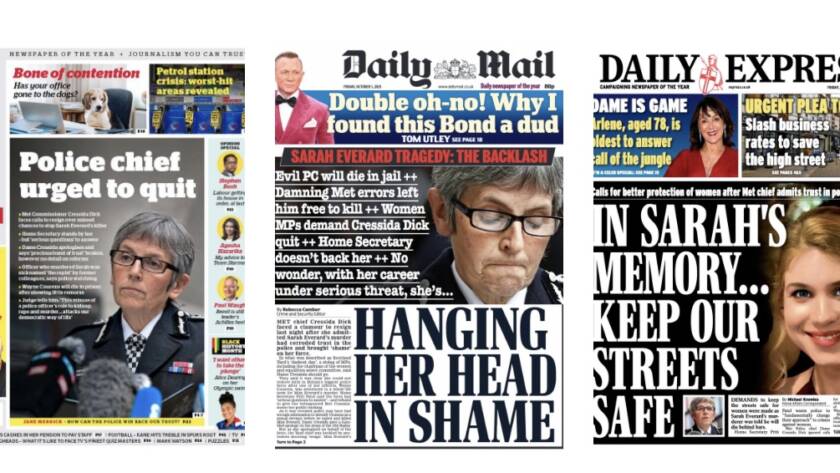
If not already done, the sentencing remarks of Lord Justice Fulford should be read by every MP, Cabinet Minister, police chief, Police & Crime Commissioner and anyone else involved in our criminal justice system. Paragraphs 19 and 23 set out eloquently – in words which should be taken particularly to heart by the Home Secretary and the Justice Secretary – the importance of law and order and what happens when trust in the police is undermined. As the Judge put it – “the authority of the police is to a truly significant extent dependant on the public’s consent and the power of officers to detain, arrest and otherwise control important aspects of our lives is only effective because of the critical trust that we repose in the constabulary, that they will act lawfully and in the best interests of society.” That trust has been severely undermined by Couzens’ crimes. Read Sarah Everard mother’s statement if you need proof: “In the evenings, at the time she was abducted, I let out a silent scream: Don’t get in the car, Sarah. Don’t believe him. Run!” It will not be just her who thinks the police cannot be believed. The damage done to policing is incalculable.

What should happen now?

  1. Politicians need to stop treating senior police officers as indispensable. They aren’t. A well-functioning police force is. But a well-functioning one should not be dependant on any one individual. The rush by No 10, the Home Secretary, even the Labour leader to express confidence in the Met Commissioner, Cressida Dick, is grotesque given what we know about the Met’s failures in the hiring and vetting of Couzens. Were she competent at her job, it would be OTT. But she is not. She has presided over or been responsible for a number of serious problems. She shows no sign of understanding that these are not merely a series of unfortunate events but signs of deeper-rooted issues, ones she seems incapable of addressing. Or perhaps unwilling. The police seem to think that because theirs is a critical public function everything they do is in the public interest and therefore it is impermissible to attack them. It is a “L’etat c’est moi” approach which does much to explain the defensive, “no true policeman” approach adopted in response to every scandal, an approach which appears to value protecting the police’s reputation above anything else. Cressida Dick should have gone a long time ago. If, as reported, some Cabinet Ministers think she has to stay because “Who else is there?” that makes reform ever more necessary. An organization which has to put up with a second-rate leader because possible replacements are even worse is an organization which has forfeited any right to be defended.
  2. There needs to be a thorough independent review into the police. And not just the Met. The Greater Manchester Police has just received an excoriating report into its multiple failures over a number of years, failures which, in the words of the Inspectorate: “This enduring service failure has given cause for concern about public safety in Greater Manchester.” There have been similar problems in other forces, over years. It is one damn thing after another in one force after another, year after year. To a financial investigator, the police seem very like finance was for a very long time: arrogant, convinced of their indispensability, resistant to change unless there was something in it for them, too willing to defend the indefensible and with scarce regard for the rules it was meant to follow. Something like the Parliamentary Commission on Banking Standards is needed. Its report – and what it revealed – the tough no-nonsense, take no prisoners language it was couched in – shamed enough senior managers to start the necessary changes. The form is less important than its substance. But all aspects of police culture, behaviour, recruitment, training, discipline, management, leadership etc need to be reviewed. The cosy, closed world of the police, of retired policemen moving into the IOPC and HMIC needs to be crow-barred open. Policing is a vital function, not an untouchable priesthood. 
  3. Culture change is hard, extremely hard. It needs three things above all: (1) senior leadership who truly understand the need for change – usually learnt after a near death experience; (2) external stakeholders who put sustained pressure to make that change; and (3) persistent hard work at all levels over years to effect it. What does good culture look like? How long have you got? But these elements are essential:
    1. Strong leadership which takes responsibility.
    2. Proper due diligence and thorough vetting both before recruitment and throughout employment.
    3. No tolerance of minor misdemeanours.
    4. A culture of “speak up” and an understanding that turning a blind eye, having misplaced loyalty to wrongdoers is unprofessional, wrong and dangerous.
    5. An effective training system.
    6. An effective disciplinary system.
    7. Accepting your mistakes and treating them as learning opportunities not as something to be PR’d away.
  4. There needs to be a thorough police investigation into what Couzens was doing in his various roles at the Met and elsewhere and what the Met and those other organisations knew or ought to have known and done. The police got the evidence which caught Couzens. But there are some troubling loose ends: (1) Why did he give his police number to the car hire company? It is such an obviously silly mistake and so inconsistent with all his other careful preparations, both before and after his crimes. Did he have a mate who could make his telephone number disappear if it came up? (2) Did he give his police number because he had hired cars before for nefarious – if less lethal – purposes? He concocted a story about having to find a replacement girl for a gang – lies when it came to explaining what he was doing the night he killed Sarah. But if he was involved in some way in trafficking or with criminal gangs, it might explain why he gave such a story. Did he say something that was true – in another context? (3) Why was he able to wipe his police phone and so conveniently just before his arrest? Was he tipped off?
  5. The Met needs to find a way of earning back the trust of the public, above all, women. Not simply a strategy for how to deal with violence against women and girls; but a strategy for how it deals with its own officers who commit sexual misconduct. Over half of Met officers who have committed sexual misconduct have kept their jobs. Why? Why does the Met have any officers in it who have committed criminal offences?

How many of these will happen? One. Maybe two. They will not be enough. A Sir Robert Mark is needed. Instead, we have a Dick as Head of what is meant to be our premier police force. Good policing matters. We should demand better.

Leave a comment

If Not Now, When?

There is always a clue. Sometimes more than one. Often hiding in plain sight, if only others used their eyes.

On Friday 9 July, Wayne Couzens, a former Metropolitan Police officer and member of the Parliamentary and Diplomatic Protection Squad, authorised to carry a firearm, pleaded guilty to the murder of Sarah Everard earlier this year. He had earlier pleaded guilty to her kidnap and rape. The story of what he did to her is harrowing.

Despite his planning and attempts to cover his tracks, he gave his police mobile number to the firm from which he hired the car he used for the kidnap. That mistake (or arrogance) was what caught him. The number plate was caught on CCTV next to where Sarah was last seen; the telephone numbers were run through the police database. One can only imagine the reaction of those doing that search when they realised that their prime suspect was a serving police officer, moreover one who would have had to go through an enhanced level of vetting for his role and his authority to carry firearms.

Perhaps they should not have been so shocked. Following his arrest, we learnt that a few days earlier he had been caught indecently exposing himself elsewhere in South London. No action was taken and this is now the subject of a separate police investigation.

This weekend we also learnt that:-

  • He had been accused of indecent exposure six years ago, again with no action being taken.
  • When in the Civil Nuclear Constabulary protecting Sellafield, his nickname among colleagues was “The Rapist” because his behaviour towards women colleagues was so creepy.

It would be unsurprising if more were to come out about his behaviour and attitudes. As of now there are 12 police officers in at least two police forces under investigation with regard to what they did or did not do re the investigation and the Everard murder.

There are a number of points worth making, even on the basis of this limited information.

  • It is usually best to avoid hiring wrong’uns into your organization. Or at least try to. An obvious point perhaps but one which is not in practice always taken as seriously as it should be. Keeping someone out is a whole load easier and less time-consuming than trying to get them out later. The refusal to admit a mistake was made, the belief in HR development and appraisals, fear of Employment Tribunals are powerful forces favouring inertia.

Cressida Dick wants a change to the law allowing her to favour ethnic minority recruits. Whatever its desirability, a more urgent priority should surely be to recruit those without criminal convictions, dubious records or poor character and to get rid of those officers who have been convicted. As at March 2021 there were 150 serving Met officers with criminal convictions (drugs, damage, assault and firearms). Representing the population is desirable. Having law-enforcers who are not law-breakers is essential.

  • Checking CVs, due diligence, vetting really matter. Small inconsistencies, missing information, stories which do not add up, which do not correspond with what was said in interview, which are changed are warning signs and should never be ignored. They too often are. Vetting is too often outsourced to juniors far away, too often treated as an administrative step to be completed rather than as a key part of the decision-making process. If someone warns you about a person’s reputation (as happened with a notorious fraudster) don’t ignore it just because you don’t have a procedure to deal with with it. Due diligence is not a paper exercise: it is trying to find out about a person’s character, what they are like when they are not shiny faced and trying to impress you.

Bluntly, if the Met’s enhanced vetting allowed someone like Couzens to hold a firearm and guard Parliamentarians, what is the point of it? Or was it the case that it simply was not done well – or at all? Improving this must surely be top of the Met’s To Do List. Is it?

  • Remember that, whatever sector you are in, you are managing risk. This should be blindingly obvious to the police. If someone dubious gets past your first line of defence, they’ve learnt that your defences are not great. They’ve learnt how to fool you and get away with it. How seriously do you think they’re going to take your training and your other defence systems? How are you going to manage a risk you don’t even know you have?
  • Don’t ignore the small stuff. Not every person indecently exposing themself goes on to rape and murder. Not every person telling a lie on a CV becomes a fraudster. But can you tell the difference between those who will and those who won’t? And do you want to take the risk of getting it wrong?

Perhaps indecent exposure (a crime) was seen as a bit of a joke? Perhaps creepy behaviour towards women was seen as him simply being a bit of a lad? Maybe the women were seen as unduly sensitive and their concerns downplayed? The police investigations may reveal answers. 

Even more worryingly, there appears to be a systemic problem within the Met regarding its officers’ attitude to women and sexual crimes. Ms Dick first raised the gap between the number of female employees the Met has (33%) and the fact that a majority of London’s population (51%) is female in November 2018. She might ask herself why women are so reluctant to join the force. Perhaps the following might provide some clues. A quarter of the 555 officers barred from joining any police force since 2017 served in the Met. A fifth of the offences leading to barring relate to sexual, harassment or domestic violence offences. Between 2012 -2018 there were 594 complaints of sexual misconduct against Met officers, of which 119 were upheld, resulting in disciplinary action. Only 63 resulted in the officer leaving. 

It is unclear whether any of them resulted in criminal action. This is simply unacceptable: sexual offences are not a case of bad manners or breaches of internal procedures. They are crimes, often very serious ones. They are not something just to be dealt with in-house. Why would anyone – any woman – have confidence in an officer described as showing “a ready willingness to take advantage of his position of trust to engage in unwanted physical contact” or another judged to have been acting as an “online sexual predator“?

Since this article criticising Ms Dick over her response to the Morgan report, the All Party Parliamentary Group on Democracy and the Constitution criticised the Met’s approach to the Clapham protests, criticisms raising important points about the Met’s arbitrary use of its powers, its confusion between law-making and law-enforcement and an inconsistent position in relation to protests by women by comparison with other groups. None of this seems to have shaken Ms Dick’s belief that, while there have been a few regrettable mistakes, there is nothing fundamental which needs to change. She is wrong. Endless investigations into previous mistakes will do little to change a poor culture if those at the top – her and her senior team – do not accept the need for change. 

And if they don’t now, after everything that has happened, will they ever?

Leave a comment

The Rise (and Fall?) of Cressida Dick

It could almost be the title of a Waugh novel. Or perhaps one of those mystery-cum-romances written by upper-class lady novelists in the immediate post-war era – when driving fast cars in the South of France while sparring with strong-jawed heroes with a past was the height of sophistication. 

It is a bit of a mystery quite why Cressida has risen to become Metropolitan Police Commissioner. She retired in 2015 and was appointed from an obscure Foreign Office security role in 2017. Was there really no other serving policeman or woman in the country able to do the job? Apparently not. Not even her role as Gold Commander in charge of the control room on the day when Jean-Charles de Menezes was killed was a problem, despite the failings of leadership and miscommunication revealed by various inquiries and the inquest into his death. Despite the Met being found to have committed “catastrophic errors” leading to the shooting, she did not have any “personal culpability“. Phew! No-one else was responsible either and, yet, somehow, these errors happen. It is the story of our times, applicable to pretty much any institution you care to name. The grosser and the more widespread the failings, the harder it is for anyone to accept responsibility. The buck stops nowhere these days.

But let’s be charitable and allow her one big mistake – after all the police and the Honours Committee did, both promoting and honouring her in the months after the shooting. What has her record been like since then? A bit of a curate’s egg – attempts to deal with gang and knife crime, a perennial problem in London, not one susceptible to easy solutions and always the subject of the usual criticisms by the usual suspects of any and all police tactics to deal with such difficult issues, terror attacks including the killing of a policeman, budget cuts etc.

She has not obviously been the worst Commissioner the Met has ever had. Nor one of the best. Her answers to interviews can be quite painful – never more so than when trying to explain that the Duchess of Cambridge was “working” when she paid a private visit to the Sarah Everard memorial on Clapham Common whereas everyone else there should expect to be targeted by the police enforcing Covid rules. The tin ear for how this came across to women incensed at the abduction and rape by a serving police officer (and killing – for which the officer has accepted responsibility, though he has yet to plead on the murder charge) was bizarre, especially given how concerned the upper echelons of the police are to appear “diverse” and “representative“. (Perhaps Representing the Pissed Off Women community has yet to make it to the Met’s HR manual.) She had little concern for Covid rules when appearing on Westminster Bridge, not socially distanced, with other policemen and women to clap the NHS. Why should she worry about such a thing? The police enforce the rules and, ahem, often make them up as well. 

The biggest criticism is that she has failed to clean up the messes left by her predecessors: principally Operation Midland where there has been a marked reluctance by the Met to implement any of the recommended changes – to its training, procedures or investigative approach – despite the quite astonishing list of police failings and unlawful acts uncovered. (Much as with De Menezes, Ms Dick has been cleared of any attempt to mislead the public about her role in the affair before she retired. Delightful as it is to see this, this is not really the principal issue of concern.) The Met seem to think that mulish obstinacy and stalling until the recommendations are long forgotten will ensure that they have to change nothing substantive. In this, they may very well be right.

One of Cressida’s priorities is to increase the number of ethnic minority and women police officers. Desirable as this may be, even more desirable, essential even, is a police force which understands the law, does not mislead courts, knows how to investigate properly and corrects its mistakes. Being in charge involves something more than being a sort of uber-HR director after all. 

But now we have the Independent Report into the Daniel Morgan murder. It is a murky, shocking and deeply unedifying tale, involving murder, corruption, botched investigations (by both the Met and other police forces), cover-ups, conflicts of interest, lies, leaking of confidential information, disclosure failures, breaches of basic IT security etc – at all levels of the Met right to the very top and over a prolonged period. Everything that could go wrong did go wrong – and this was intended by far too many of the officers involved. It is an immensely complex matter – set out in 3 volumes and 1,276 pages. Two chapters are very well worth reading: Ch.10 – “Corruption: Venality to Lack of Candour” and Ch. 11 – “The challenges of securing co-operation.”

It is all very reminiscent of the Met in the 1970’s before Sir Robert Mark became Commissioner and stated, crisply and accurately, that the CID was “the most routinely corrupt organization in London“. The heart of this case too is police corruption, a corruption which the Panel describes as institutional, a conclusion amply justified by what is set out in the Report.

While much of the original events happened long before Ms Dick was a senior officer, there are three findings which should raise very grave concerns about her behaviour: –

  1. As Assistant Commissioner between 2011 – 2013 she was responsible for agreeing how the Met would provide information to the Panel. Despite promising “exceptional and full disclosure” she took every step to limit what would be disclosed and how.
  • This continued after she became Commissioner. There was no improvement in co-operation, with significant delays to the production of documents (some only finally received years after asking), evidence and access to police records. Rather, as set out in Ch 11, paras 70 – 71, the Met were “determined not to permit access to the [police] system which would have enabled the panel to carry out its work far more effectively and efficiently.” No “reasonable explanation” was ever received for the refusal by her and others over 7 years to permit “proper access“. The Panel’s conclusion was that there were “significant impediments” and the Met “did not behave with candour, in an open, honest and transparent way.” Bluntly, it obstructed an inquiry set up by the Home Secretary. Cressida Dick was involved in that obstruction and in charge as it continued.
  • As at December 2020 the Met advised the Panel that “it uses different definitions of corruption depending on the circumstances. However, they have failed to explain what the different definitions are or what the different circumstances might be.” This does not inspire confidence that the Met would recognise corruption when it happens, bother to investigate it or take any effective action against anyone found to have crossed these invisible and movable lines. (Perhaps she was too busy being “absolutely outraged” at Line of Duty depicting “casual and extreme corruption” as a common occurrence in policing to notice what was happening closer to home.)

How can someone in charge of an organisation criticised in such a manner (as well as so personally) in all conscience stay in charge? We have become inured to such people squeezing out a weaselly apology and the usual lessons learned mantra. This report breaks new ground in helpfully listing out for us all the lessons which have already not been learned and which will doubtless not be learned again. Perhaps her contract won’t be renewed and she can retire (again) in due course. Maybe Priti will shout at her in private.

But this simply is not good enough. First Midland, now this. If she had any honour or self-respect or any care for the reputation of the police, she would go. Now.

Leave a comment

A Woman’s Perspective

In 2020 118 women were killed by men. In 2021 the number was 141. In 2022, 108 women were killed. On average, one death every 3 days. Between the date when Sarah Everard went missing on March 3, 2021 and the date this article was first published, another 3 women will have been killed by a male perpetrator. Unless they become a news story we rarely know their names, the majority likely killed by a partner or someone known to them, 70% in the home. Even so, the chances for any individual woman of being killed is low; by a total stranger lower still. The murder rate for men, especially young men, is twice that for women. 

Where there is a very significant disparity and one which affects every day life, is the level of sexual abuse, harassment and assault which women face – routinely and throughout their lives. It ranges from lewd suggestions made by strangers while out during daytime, to flashing, groping, grabbing a girl’s breasts, masturbation over a woman’s skirt while in a crowd, spiking a drink so that rape could be performed, buggery without consent and so – miserably – on.* 

And it’s not just assault: it’s the middle aged clients making obscene suggestions over breakfast on work trips or highly educated, highly paid young men in the City discussing female colleagues in the most intimate and lurid terms. Or senior traders setting up pornographic websites at work and senior management dismissing this as a “private” matter because the revenues brought in by the traders were too valuable.* 

The focus these days has been on violence. But there is also a lack of decency, of basic respect, an attitude of contempt and hatred and vilification and demeaning of women by men which happens in all too many situations. It is wrong. It is tiresome. It prejudices women’s lives and opportunities.

Every woman will have a similar tale. Every woman will have learnt how to deal with it, how to take precautions against attacks by strangers, how to avoid places or situations of risk, to shrug off gropers, to have a cutting riposte available. Because life is too bloody short and if every sexual assault was reported the police would be overwhelmed and would it be taken seriously anyway. And, frankly, because women often feel guilty when they are attacked, worrying about whether they were somehow at fault and about the process of investigation. 

We may have moved on as a society from the days when Lord Havers in the Ripper trial could make a distinction between respectable women and prostitutes. But old attitudes persist: see how the police talked about some of the abused girls in the Rotherham case, as if they were not worth much or asking for it. There is an expectation that women need to take responsibility for keeping themselves safe, need to learn how to handle the boors, that this is the way men are, this is normal so it is women who have to adapt.

At one level this makes sense. We lock houses, cars; we don’t leave wallets out or handbags open. But it is also infuriating. Why can’t we assume that we will be safe, that the expectation should be for men to behave decently? Why should we take responsibility for avoiding male misbehaviour? Why not focus – for a change – on those most likely to be perpetrators and changing their behaviour? Or limit their opportunity to misbehave? When some, sarcastically, suggest curfews for men they are making this very point. There is lots of focus on what women have to do and rather less on what men could be doing.  

Women from a young age understand that they are physically weaker, that they are at risk of a particularly repellent type of violence, one which strikes at their very essence, and have to adjust, even limit, their lives in a myriad ways. It is something they learn to live with. Some find it easier to shrug off than others. But all would much rather do without it. Adjusting your life to minimise the risk of sexual violence is not something which men have to do as a matter of course. And, bluntly, men do not have to fear sexual attacks by women in the way that women learn that they have to from men.**

#NotAllMen. Obviously. But when a particularly tragic case shines a harsh light on what women endure, there is something narcissistic (grotesque even) about the rush by some men to focus on how they are not to blame, should not be victimised and should not have their freedoms curbed. Perhaps at such a time a smidgeon of empathy for women who have had to endure effective curbs on their freedoms day in day out as a result of male misbehaviour might be more appropriate than outrage at the merest possibility of curbs on men’s freedom. 

So what might be done?

  • Teaching young men from school onwards how to behave decently to women. Not excusing bad behaviour as “laddishness” or “boys being boys” or turning a blind eye to it or admiring it or those who boast about it, because of some other skill. Disciplining men in the workplace for bad behaviour to female colleagues, something which does not get done often enough, no matter how many “values” and “respect” policies firms have. 
  • We might also want to consider whether the pornification of much of our media and the normalisation of porn are a good thing. The view that it gives of women is not one calculated to induce respect or, indeed, a realistic view of sexual relations or female sexuality. Not an easy topic. No-one wants a Mary Whitehouse-style Puritanism. But attitudes and behaviour are formed by many factors. If we really want to change the former we need to address why people have the views they do. None of this means the end of flirtation and joy and romance and lust and all the many wonderful aspects of male-female relationships.
  • Have effective well-trained police and a properly funded criminal justice system. Little point passing legislation or reporting crimes if it takes years for them to come to trial or the investigation is inadequate. That is no deterrence. Nor justice either. Punishment, deterrence and justice are far more important than vigils and expressions of sympathy.
  • If you are going to legislate think about what you are saying. Currently, fly-tipping on streets is an offence. Harassing women on those same streets is not. Even under the proposed new Police Bill, the sentences for the former will be longer than for assaults on women. The message: living women are less important than old fridges or statues of dead slave owners.
  • Listen to women and their experiences. Really listen to them. Don’t just pretend to. Understand, for instance, why single sex spaces and places of refuge matter to them. Fund the latter properly. Erin Pizzey had to fight hard to get them established. Now they are losing funding or being made gender neutral by those who refuse to understand why they are needed.
  • Think about how our public spaces/transport systems are configured and managed and how they are used/seen through women’s eyes. CCTV may help catch a criminal after the act. It does little to prevent it or make women feel secure.

There are no easy or complete answers which will eliminate all risk or stop all criminal, loutish or sexist behaviour. But we can make a start by not accepting as normal what women have, for far too long, had to accept as normal, no matter what their age, race, class, job. Individual men who have behaved like perfect gentlemen at all times may feel unfairly blamed. But remember this: it is not enough just to behave well yourself. The majority of bankers behaved honestly but were still tainted by the crimes of others. To change a culture for the better, all must play their part. Men have a vital role to play to change the world in which women live – as allies, as champions, as teachers, as exemplars, as defenders – so that, whether they are 18 or 80, women can live their lives to the fullest and without fear of men behaving badly.

No man is an island, after all. 

(*Not my vivid imagination. All have happened to or been investigated by me.)

(** Jenni Russell’s article in the Times on 4 April 2023 sets out very well women’s concerns about their vulnerability to male violence.)

This post was first published on 14 March 2020 not long after the murder of Sarah Everard in London. The figures in the first paragraph have been updated to reflect the position as at April 2023.

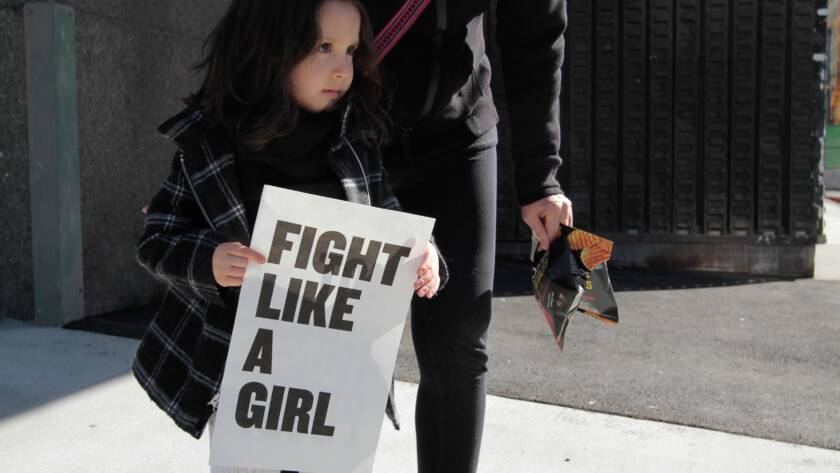
Photo by Rochelle Brown on Unsplash

Leave a comment

Here We Go (Again)

It’s time once again to talk about a key institution: one which politicians feel it necessary to praise and support, whatever their private views, one which many feel we cannot live without, a rather dysfunctional, arrogant one, repeatedly making the same mistakes, mistakes which have caused great harm to those directly affected, repeatedly refusing to learn the lessons and change its ways, hostile to outsiders, an organisation whose senior members rarely seem to bear the consequences of the problems they oversee.

No. Not that one. The police. Yes, afraid so.

Some may recall Operation Midland (the investigation into alleged child abuse by politicians) and the Metropolitan police’s lofty refusal to do anything about its gross list of failures in that inquiry – not simply procedural failings but actual unlawful behaviour. (If not, see here.) Not to mention its high-handed dismissal of the recommendations of the Henriques report into its failings, in which the judge pointed out to the police what the criminal presumption of innocence and burden of proof mean for how it should investigate crimes. Or the IOPC’s inadequate investigation of the officers concerned. Or the failure of any of the senior police officers involved to take any sort of responsibility for what happened on their watch. Rather, as so often happens in public life these days, the Met’s leader, Sir Bernard Hogan-Howe was promoted to Poo-Bah on a government body and has now, given his Dido-like record, been tasked with investigating the loss of records from the Police National Computer. Reportedly, it is Cressida Dick, the current Met Chief, who may have to take the fall, it being so much easier to blame a woman for men’s failings if one is conveniently to hand.

Two years on – what has happened? Nothing. Henriques’ excoriating report has, to all intents and purposes, simply been ignored: a giant FU by the police to the judge. The promised review by the Chief Inspector of Constabulary also seems to have disappeared into the long grass if, indeed, it ever started. So irritated by all this was the judge that he recently told the Today programme that there should be yet another inquiry. And not just into the police but into the IOPC as well. 6 former Home Secretaries agreed with him, as did the Times.

But in truth we don’t need this. What we do need is the perfectly good one we do have to be implemented without further delay. We need a Home Secretary with a bit of gumption to order the police to do so and hold their leaders personally accountable for its implementation. We need Ministers to have no truck with the all too prevalent belief that the police’s job is to provide therapy for victims, to believe them without question rather than properly investigate their allegations, that it is their job to police “hate” and, rather than investigate crimes, record matters which are not. This last would be laughable were the consequences for individuals not so serious. Hate Incident Reports which report matters which are not crimes can nonetheless be disclosed by the police to potential employers and others. Little wonder this has been and is being challenged in the courts and police forces, such as Merseyside Police, were forced to backtrack when they publicly claimed that being offensive is a criminal offence. It isn’t and in any self-respecting society never should be. 

What do we get instead?

Merseyside Police are to investigate why the Metropolitan Police did not investigate two other individuals who, like Carl Beech, allegedly lied about child abuse in Operation Midland. Not investigate and prosecute the two individuals, you understand. That will have to wait. One mustn’t rush these things.

Another high profile trial into sex abuse charges from 50 years ago, this time against Lord Ahmed, a former Labour peer, collapses as a result of what the trial judge describes as “disgraceful” failings by the police and CPS which “sabotaged the trial”, including the police failing to follow up reasonable lines on enquiry and failing to disclose relevant evidence. This last was one of the lessons which should have been learnt after the failure of the Liam Allan rape trial in 2017 when the police failed to disclose evidence they held showing his innocence. Indeed, disclosure failings underlaid the miscarriages of justice in the Birmingham 6, Guildford 4 and Maguire 7 cases in the 1970’s. (There was a Royal Commission after those too.) You’d have thought that 50 years would be long enough to learn that particular lesson. Apparently not.

Meanwhile the Home Office is introducing another Crime and Sentencing Bill with lots of fine words about harsh sentences, taking crime seriously, cracking down and all the usual blather Home Secretaries come out with because they think it sounds good with the public. It was all deliciously undercut by the Justice Minister, Chris Philp, admitting to the Commons that there is little evidence that longer sentences cut crime and that all the evidence shows that the likelihood of being caught and punished is a much greater deterrent. Which brings us back to the police. Fat chance of any of that happening if they do not understand how to do their job, do not understand the law, refuse to listen when they are told what it is, refuse to implement recommendations to make them do their job properly, refuse to confront their own failings or take steps to change. 

And even when criminals are caught and charged, the Justice Secretary, Robert Buckland, admitted last week that the backlog of cases is so great that current trials, even those involving charges against children, are being postponed until 2023. What sort of deterrence value is that?

We don’t need endless inquiries and promises to learn lessons. We don’t need the disastrous mix of stupid sentimentality – which thinks that strong expressions of how one feels about a problem are a substitute for effective action to resolve them and a justification for ignoring all the processes put in place to achieve such resolution – and populist statements, based on no or in complete contradiction of the available evidence.

But that is what we are getting. Until the next scandal when the whole sorry saga will be repeated. Not that anyone really cares – other than the accused, the victims and their families and those who think that law and order is the most basic and important function of the state. The Tory party used to care about that too once. 

It’s rumoured that Priti Patel might be replaced by Michael Gove, though whether that means demotion or promotion for either is hard to say. Who cares. If only whoever is Home Secretary now and in the future would pay heed to the politician said to inspire the PM and his “Action: this day” stickers.

Leave a comment

Lockdown Blues

This film of a police officer telling a member of the public that if he doesn’t do what he tells him he (the police officer) will “make it up” and that he – rather than the innocent citizen – will be believed has been widely publicised – and criticised. The Lancashire Police have apologised for the officer’s “completely unacceptable” language and behaviour. As well they might.

No doubt lessons will be learned and training given. Well, let me summarise that training. There are three things the police should never “make up”: the law, offences or evidence. It really should not be hard to understand this. Or follow it.

The inevitable internal investigation has now started. There are a few points worth noting about the behaviour of the officer making these remarks.

(1) How likely is it that this was the first time this officer thought of saying he would make stuff up to get his way?

Any investigation will necessarily have to focus not just on this incident but on other cases where this officer’s evidence or statements or behaviour may have been critical to the outcome. If the investigation does not do this of its own accord, defence lawyers are likely to make themselves heard.

(2) Note the striking confidence with which he asserted his belief that his uniform, his status would automatically make him more believable. It is not so much the arrogance of the statement which is shocking but its truth. And it is precisely because it is (generally) true, that the officer’s behaviour is so reprehensible. Abuse of trust undermines the confidence which the public and police both need if policing is to work well – especially during lockdown when the police have been given unprecedentedly wide (and potentially oppressive) powers.

Abuse of trust at any time undermines the reputation of every other police officer, no matter how honest or hard-working. As the Lancashire Police’s apology put it: “It only takes one incident like this to undo the hard work of so many.” Quite.

And what of the other officer in the incident? You did notice him, didn’t you? The one who was standing by while this was happening and did not intervene. (The Lancashire Police did not feel it necessary to apologise for his conduct, inaction generally being seen – wrongly – as somehow less deserving of criticism.)

Why might that be? Maybe he did not think what his colleague was doing was wrong. Maybe he did but did not think he should intervene at that stage. Maybe he didn’t think he would get any support from his colleagues or superiors if he did. Or, worse, that he might be criticised or ostracised. (Perhaps the investigation will ask questions about this aspect too.)

Or maybe it was as simple as thinking that he should stick by his colleague. Esprit de corps, teamwork, loyalty to colleagues, to a common aim or work purpose, collaboration are all highly valued (from childhood onwards), trained for, rewarded. It is easy to side instinctively with “us” against “them”. It goes with the grain of human behaviour. Those seen as snitches are not viewed favourably. Little wonder then that people might find it hard to realise that loyalty to misbehaving colleagues is misplaced.

If police officers sometimes find this hard, despite the importance of their role, how much harder is it for the rest of us. So maybe we need to realise that creating the sort of culture where people do not turn a blind eye, where people instinctively challenge or call out wrong behaviour, takes something deeper and more sustained than just a whistleblowing policy, however well-written, and annual training.

Leave a comment

A Toxic Culture

A Toxic Culture?

In March 2017 PC Keith Palmer was killed while defending Parliament from a terrorist. In August 2019 PC Andrew Harper was killed while investigating a suspected burglary. These are only 2 of the 50 police officers killed between 1990-2010. Few of us face the risks ordinary police officers run. This does not excuse what is set out below. It does explain why it is so necessary, if their work and sacrifices are to be worthwhile and the public gets the policing it is entitled to, that the issues raised below be properly addressed. 

What follows is not a comprehensive list of every scandal affecting the police. But it is an overview of their range over five decades.

  • 1972-1977: Sir Robert Mark’s campaign to root out corrupt officers within the Flying Squad and CID, resulting in more than 500 officers being dismissed or “resigned”. He memorably stated: “a good police force is one that catches more crooks than it employs”. (Bent Coppers: Crossing the Line of Duty – a 3-part BBC documentary provides a good account of this period.)
  • 1974-1989: The West Midlands Serious Crime Squad – eventually wound up after allegations of incompetence, malpractice and abuse of power, leading to over 100 cases collapsing or being overturned on appeal. An investigation into its activities led to some disciplinary action but no prosecutions, a decision for which the DPP (Barbara Mills) was severely criticised.
  • 1970’s: The activities of various police forces in the Irish miscarriage of justice cases – the Guildford Four (1974), the Birmingham Six (1975), the Maguire Seven (1976).
  • 1978-1982: Operation Countryman – an investigation into corruption within the Met and City of London Police in the late 1970’s. Information was released in 2018 about efforts made by the Met and the DPP (Sir Thomas Hetherington) to cover up the scale of wrongdoing and obstruct the investigation by the Hampshire and Dorset police.
  • 1979: The death of Blair Peach during an Anti-Nazi League demonstration against the National Front in Southall. In 2010 a police report stated it was likely that a Metropolitan Police officer “struck the fatal blow” and attributed “grave suspicion” to one unnamed officer, who may also have been involved in a cover-up with two colleagues.
  • 1981: Operation Swamp, the subsequent Brixton riots and the Scarman report into how the police used their “stop and search” and other powers.  Numerous recommendations were made.
  • 1980’s – 2010: South Yorkshire Police’s failures in the Rotherham child exploitation scandal. The Jay Report described how the police failed to investigate adequately or at all the reports they were receiving over at least a decade of child sexual grooming.
  • 1989: The Hillsborough stadium tragedy. Two reports – the 1990 Taylor Report and the 2012 report by the Independent Panel – described the extent of South Yorkshire Police’s negligence, attempts to shift blame on others and pervert the course of justice.
  • 1993: The investigation into Stephen Lawrence’s murder and the resulting 1999 Macpherson Inquiry which found that many Scarman recommendations had not been implemented. Macpherson, unlike Scarman,  described the police as “institutionally racist”. Subsequently it was revealed the police had spied on the Lawrence family.
  • 2003-2020: The failures of the Greater Manchester Police in relation to Operation Augusta and child sexual exploitation, described in the Newsam report published this week. The report’s statement that: “The authorities knew many were being subjected to the most profound abuse and exploitation but did not protect them from the perpetrators. This is a depressingly familiar picture and has been seen in many other towns and cities across the country.” could apply to a number of places and police forces round the country.
  • 2006-2011: Allegations were made during the News International inquiry that the police were selling confidential information to journalists. This was to be looked at in the second stage of the Leveson Inquiry which never went ahead.
  • 2009: The death of newspaper seller, Ian Tomlinson, as a result of police assault during G-20 summit protests. 
  • 2011:  It’s revealed that various undercover policemen had infiltrated environmental groups for a number of years, entering into deceitful relationships with activists and fathering children. In 2015 the Met apologized to women “tricked into relationships” over 25 years, closed the units and made financial settlements of circa £3 million. An “Undercover Policing Inquiry” into “appalling practices” in undercover policing was set up. It has yet to report.
  • 2012 onwards: Cleveland Police has 5 Chief Constables in 6 years, the first in this list being dismissed for deceit and misconduct. In 2019 it is put into special measures following an independent report describing it as “inadequate” in all fields, “directionless, rudderless and clueless”, “putting the public at risk” with some officers “not acting with honesty, integrity and competence“. 
  • 2014: Operation Midland into child abuse allegations made by Carl Beech against politicians and others is launched. In 2019 following his conviction on multiple counts of perverting the course of justice, the Henriques Report identifies extensive failings in the original investigation.
  • 2015: Police Scotland are criticised by a judge for breaching data privacy laws and the ECHR when spying on journalists and their communications with their sources. Similar breaches were committed by Cleveland Police.
  • 2018: The Met’s anti-corruption unit is under investigation for corruption in relation to allegations of assault, racism, child abuse and child grooming.
  • 2018: Cliff Richard is paid £400,000 by the South Yorkshire Police for its behaviour over the raid on his home in relation to historic child sex abuse allegations, including informing the BBC about the raid.
  • 2005 to date: there have been 4 Metropolitan Police Commissioners. Ian Blair resigned after falling out with the London Mayor; his successor resigned because of his links with one of the journalists implicated in phone hacking; Hogan-Howe lasted 6 years. Under his leadership Operation Midland is set up and people arrested under Operation Yewtree and bailed for lengthy periods without charge, a practice later banned. His replacement in 2017 is Cressida Dick, the senior policewoman in charge when a blameless electrician was killed in 2005 following terror attacks.
  • 2020: The Met refers itself to the police watchdog for its failure to act on recommendations made by Sir Richard Henriques to investigate two others for perverting the course of justice in relation to abuse allegations arising from Operation Midland.

It is a dismal list. It could be twice as long.

To a financial investigator, this picture is very familiar. Despite innumerable inquiries, changes in the law, disciplinary proceedings, recommendations, new procedures, training, apologies, compensation paid, some prosecutions and that perennial favourite – “lessons have been learnt” – bad, criminal behaviour (which all the people doing it would clearly have known was wrong) and incompetence have repeatedly occurred in forces all over the country over decades. Not one or two “rotten apples”; whole orchards of them. There has been a culture of poor leadership, cover-up or the truth only coming out many years later and of other key agencies turning a blind eye, aiding and abetting or failing to set or demand high standards of probity and professionalism. 

Above all, there has been a failure to ask why such problems keep on happening, despite all the remedial steps taken and all the apparent learning of all those lessons. 

It is irrelevant that there are many policemen, possibly even the majority, who don’t behave in this way. The same could be said of banking. The professionalism, hard work and good name of the honest good guys are tarnished by the bad, useless ones. The bad drive out – and demoralise – the good. 

Policing depends on consent. Trust is essential to that consent. Scandals erode that trust. How can our cherished system of policing work then?

Perhaps – like banking – it is time to realise that there is something systemic and deep-rooted and toxic in police culture which allows or encourages or does not stop officers from behaving badly. Perhaps – like banking – it is time to make the hard cultural changes needed if training and rules are to work. Perhaps – unlike banking – it is time for senior leaders to take real responsibility not merely talk about it. Perhaps – like banking – it is time to realise that even successful or vital sectors or professions can in reality be really rather more second-rate than we like to pretend. Perhaps we should stop deluding ourselves that our key institutions are as good as we sometimes rather vaingloriously claim. The police are not the only body of which this could be said, of course.

Law and order are the most basic functions of the state. But the police should not be treated as a sacred cow. A comprehensive, dispassionate and ruthless look at how the police operate and real tough action to change it for the better are needed.

What are the chances?

Leave a comment

The Tyranny of Low Expectations

It is generally a good idea, when facing severe criticism from an inquiry, to concede with as much good grace as possible, to keep your immediate thoughts about the idiocy of the judge to yourself and not to try and justify the behaviour which has been criticised. No good will come of it: you will look like someone paying lip service to the findings who really thinks you’ve done nothing wrong.

It is advice which the Metropolitan Police singularly failed to follow in their response to the report by Sir Richard Henriques on Operation Midland, the now notorious investigation into alleged child abuse. The day of its publication the Met’s response focused on why no senior officer had done anything wrong despite the long list of failings catalogued: 43 in total, including that, in obtaining search warrants without being fully transparent about the evidence they had, the police had broken the law. This is about as serious a failure as it is possible to have by public servants whose primary and most important duty is to uphold it. Not break it. The Met’s apology for the upset caused by the searches seemed to be quite unequal to the failure – the sort of apology you might make if you’d inadvertently interrupted someone having a bath – rather than a realisation of the very great damage done to policing and the administration of justice if those tasked with it cannot be bothered to behave lawfully.

The report by the IOPC the following day adopted the same self-justifying tone to explain why there was no basis for disciplining any of the officers involved despite its comprehensive investigation, one so comprehensive that none of the officers involved had been interviewed. What would the IOPC consider an inadequate investigation to be?

One of the critical failings was the police deciding – and publicly announcing – that allegations were true and believable before they had been investigated, as a result of an obligation to believe a victim and, indeed, to call them a victim rather than a complainant. Paragraphs 1.11-1.35 of the report on why these two practices are so seriously prejudicial to proper investigation, the presumption of innocence and the burden of proof (the foundations of our entire criminal justice system) are very well worth reading. In consequence, one of the judge’s most important recommendations was for the police not automatically to believe complainants: “If one policy decision results from this review I trust that the instruction to ‘believe’ a victim’s account will cease.”  The police seem disinclined to follow this advice. Even Vera Baird, the Victims’ Commissioner, despite being a QC, seems not to understand that belief in an allegation is not necessary to investigate it properly.

The belief that victims must be believed without question did not come from nowhere. It arose in part in response to previous police failings. In 1982 Roger Graef’s documentary series about Thames Valley Police caused a stir when the episode entitled “A Complaint of Rape” showed male policemen treating a female rape victim with harsh dismissiveness. This led to important and valuable changes in how the police investigated this most serious and sensitive of crimes. Similar changes have been made with regard to how child victims of sexual abuse are treated, both by the police and by the courts when they give evidence. All of this is welcome: old-fashioned assumptions (that women are asking for it, that children are liars) are no basis on which to investigate crimes.

Some old-fashioned attitudes still persist though: young troubled girls in care are seen as not “nice” and in effect asking to be abused by their attackers, the assumption this time being wrapped up in the mistaken and nonsensical notion that an underage child has given “consent”. At the other end, the police have veered from ignoring crimes alleged against the famous (Savile) to pursuing them with unseemly malice and a misguided focus on making media headlines (Cliff Richard).  (If there is one thing to be regretted from the decision to abandon the second half of the Leveson Inquiry is that there was no examination of the police’s relationship with the press and whether this is compatible with their policing role. It is something which needs much more scrutiny than it is, for obvious reasons, ever likely now to get.) It as if the police veer from one position to another in response to the scandal du jour without any understanding of – or firm attachment to – the long-standing principles underlying the criminal justice system.

Now the police have adopted the spuriously sentimental assumption that a victim should be believed without question. To do so is fatally to confuse therapy and care with investigation. The former is laudable but not the role of the police. The latter is.

For investigators to do their job properly they need two skills above all: emotional intelligence – empathy, an ability to understand human behaviour and motivation and build a relationship with both (alleged) criminal and victim. The second is to have what Graham Greene described as the “splinter of ice in the heart”, the judgment and analysis that makes them look coolly and dispassionately at the facts, to base their opinions on what they have found and not what they would like to believe to be true, that makes them remember that they need to find and test the evidence and ensure that it is good enough to convict someone to the standard required.

As the report put it:

Any process that imposes an artificial state of mind upon an investigator is, necessarily, a flawed process. An investigator, in any reputable system of justice, must be impartial. The imposed ‘obligation to believe’ removes that impartiality.

If the police allow sentimental beliefs, preconceived opinions and assumptions, pressure from the media or politicians to override the judgments they need to make, they are doing a profound disservice – to the victims (who need their complaints taken seriously and investigated properly, a crucially important difference to simply being believed), to the defendants (who are entitled not to be accused publicly – or at all – on the basis of opinion unsupported by any evidence), to the public’s faith in policing, to the administration of justice itself.

What was so dismaying about the police’s response to the Henriques report was not just the rush to protect their own, the desire to explain why disciplinary action was unjustified, the belief that incompetence and negligence were not sufficient to merit any kind of action.  The approach was that the police had broken no disciplinary rules; they did not intend to cause harm and there was no evidence of criminal behaviour so that was that.  The level of incompetence and negligence on display, the failures in basic investigative tradecraft were simply to be ignored. No: what’s worse is the assumption that nothing more than this can or should be expected.

The police had passed the low bar expected of them.  43 failings in one inquiry can happen but no-one need take any responsibility.

It is a stunning failure to understand what leadership means.  Leadership means, in essence, taking responsibility for what happens in your watch – even if you are not personally to blame.  Those senior officers who were in position when this lamentable series of failures occurred were the leaders in charge.  If leadership is to mean anything, if setting an example to all those in the police service matters, if an apology is to be meaningful, if learning lessons is to be something other than a cliché to be trotted out, if integrity at the top of policing is to have substance, then those in charge of this inquiry should, in all honour, take responsibility and resign.  Not seek to evade it with self-serving justifications and remorseful cries of “Oh, if only I’d done something different. 

The Home Secretary (not noted for either her empathy or integrity or, indeed, her understanding of the criminal justice system – as her latest spat with the Attorney-General suggests) has apparently asked for a further inquiry to be carried out – though since it is to be carried out by the very body which has come up with the practices roundly criticised by the Henriques report, don’t build your hopes too high. In the meanwhile, the Prime Minister has made great play of his intention to fund 20,000 more police for our streets.  Without wishing to downplay the work of ordinary policemen or, indeed the need for effective policing, with this sort of inadequate leadership and incompetence on show, it is worth asking whether this really is the best use of public money?  Maybe fixing the problems identified by Sir Richard Henriques and implementing his recommendations might come before spaffing money on more police. It can’t, after all, cost that much to remind police leaders of that well-known saying: “The buck stops here.

Leave a comment

Blind to Justice

In less febrile times, the police’s behaviour in Operation Midland ought to be a national scandal:

  • a failure to understand that the police’s job is to investigate, properly and thoroughly, allegations not announce that they are credible simply because they would like them to be true or to gain publicity or to make up for their failure to investigate other child abuse allegations;
  • a failure to provide all the relevant information to the court when obtaining search warrants;
  • wasting public money paying someone else to investigate the complainant;
  • a lack of urgency (especially concerning given both the age of the allegations and the alleged perpetrators.

Then, when it all falls apart, a failure to investigate the officers concerned, declaring – without even bothering to interview them – that there was no basis for any disciplinary action. Instead, senior officers have gone onto better jobs. Rewards for failure, indeed. Who do they think they are? Bankers?

This is not an isolated incident though it is a particularly egregious one. It is as if the police have forgotten what their basic function is: to investigate allegations of crimes. Not to provide therapy to the alleged victims; not to determine the truth of the allegations – that is for the judge and jury (or magistrates) at a trial; not to get publicity and make themselves look good.

In this failure they are aided by the Ministry of Justice which seems not to understand some of the basic precepts of the criminal law: innocence until proven guilty, for instance.  If you give guidance saying that the term “victim” rather than “complainant” must be used, that the “victim” must be believed, then you are assuming what you are seeking to prove.  How can that be fair to the defendant?

It cannot be said often enough that the job of an investigator is to take an allegation seriously by investigating it properly but that this is not the same as believing it, unless there is evidence to back it up. Anyone not understanding this pretty basic concept has no business calling themselves an investigator. Ruthless and cold it may sound, but sentimentality is a very bad basis on which to make policy and nowhere more so than in the criminal law.

But it is not just with the police that problems arise. Pretty much all parts of our criminal justice system are under stress, under-resourced and failing to deliver as they should: –

  • The process of disclosure of evidence – both for cases before magistrates and jury trial – is inadequate, with the police unable to review the mass of electronic/social media communication, something which has came close to causing serious miscarriages of justice for men charged with rape.
  • The hamfisted way the new Director of the CPS went about clarifying the disclosure requirements, managing both to annoy women’s groups unnecessarily while failing to deliver a clear message about the importance of obtaining evidence, regardless of how upsetting this might be.
  • The very slow process of sending cases to trial – defendants are being told now that their cases will not be heard until summer 2020 – as a result of under-funding of the courts system.*
  • There are judges available to sit but courts are closed to save money. In some cases, matters are simply not going to court at all.
  • The virtual unavailability of legal aid, both because of a very restrictive means test and because the rates are so low that few lawyers are choosing to do such work. This affects anyone involved in a legal process such as an inquest, as the families of those killed in the London Bridge terror attacks have found out.
  • The “innocence tax” whereby an innocent person only gets their costs reimbursed at the lower legal aid rates not what they actually paid, leading to them  losing their savings or being made bankrupt.
  • A lack of duty solicitors available to those arrested and thrown into a police cell. Those first hours and what is said/not said are often crucial. And yet in parts of the country there is no-one available to help.
  • The very long delays while people are released under investigation with no idea when a decision will be made and with no obligation on the authorities to tell them, a form of purgatory while lives are put on hold.
  • Privatised forensic services which are on the brink of collapse, inadequate and risk causing miscarriages of justice.

Don’t imagine that matters are better at the high end of criminal work. The SFO continues its long-established tradition of never living up the promises made by those in charge of it, its latest difficulties relating not just to failures at court but to a report detailing a toxic bullying culture within the organisation.

The FCA’s record on the criminal side has hardly been stellar. And then are the prisons and the probation services.  One example will suffice: Feltham Young Offenders Institution, a place so troubled that the government has stopped sending anyone there following a recent independent inspection.

The legal system has few friends. There is an assumption that it mostly deals with the criminal and the feckless. Few politicians care about them. It has no “Aaah” factor. Most people hope never to encounter it. Those who are caught up in it are generally appalled by the experience. It has been in recent years put in the care, if that is the word, of politicians with little knowledge about it and little willingness to learn, let alone to fight to make it better.

For 6 years from 2012 to 2018, no lawyer was deemed worthy to be Minister of Justice, the choice instead falling on Chris Grayling and Liz Truss, about whom the word “second-rate” would be an undeserved compliment. Michael Gove spent much of his time undoing the damage caused by his predecessor. Few Ministers lasted more than a year. And who was responsible for the police? Well, one Mrs May, followed by Amber Rudd and Sajid Javid.  Enough said.

Lawyers, however eloquent they may be on behalf of their clients, are generally hopeless at explaining why law and justice matter to anyone other than fellow lawyers. But our legal system does matter, very much indeed. There is no more important function of the state than the maintenance of law and order.  

Crucial to that are a competent police force, a legal system which works and in which equality under the law and access to justice are not simply empty phrases, prisons which are something other than a breeding ground of violence and hopelessness and a probation service which works. All these aspects matter not just one of them.  

The rule of law is not simply an airy phrase: it is the reality of a state able to keep its citizens safe, a state able to apprehend criminals, a state able to dispense justice, a state able find the right balance between the rights of the innocent and the guilty, a state able to enforce its laws, a state able to punish fairly and provide the hope of rehabilitation for those who have paid their dues.

The Government has announced that next week is “Crime Week” and that it will hire lots of policemen to make criminals feel terror. But unless it is prepared to fund all aspects of the criminal justice system properly, unless it is prepared to recognise that competence and professionalism are what matter not glib phrases more suited to a Chinese police official, unless it is prepared to listen to those who have been pointing out the failings and what needs to be done to correct and improve them and take action, tough-sounding announcements will mean little.

The rule of law in its widest sense is something of which Britain ought to be proud; it has probably had a greater claim than the NHS to be considered “the envy of the world“. But for too long it has been neglected, downgraded, ignored and managed by penny pinchers who know the price of everything and the value of nothing. Futile as this plea may be, it is long past the time for this to stop.

*As at April 2023 the delays in cases going to trial have become very much worse, in some cases taking as long as 5 years. As set out in subsequent posts, all aspects of the criminal justice system have got worse.

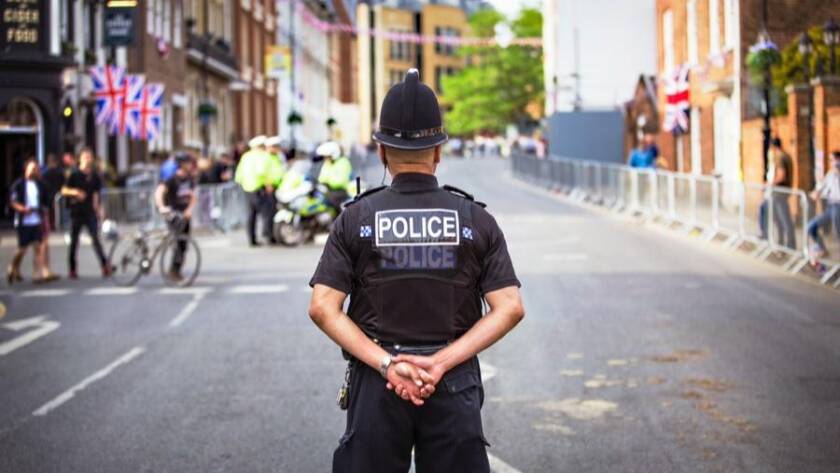
Photo by Mahosadha Ong on Unsplash

Leave a comment