Skip to content Skip to sidebar Skip to footer

Questions, questions.

Sir Keir Starmer must be sick of being asked the “what is a woman” question. But in light of his statement that a woman is an “adult female”, Anneliese Dodds saying that a medical diagnosis will still be required in its reform of the Gender Recognition Act (“GRA”) and Wes Streeting’s regret over the treatment of fellow MP, Rosie Duffield, on this issue, here are some questions which now need answering by Labour.

Why has Labour changed its views? How far, in fact, has it done so? What are the details of their revised policy? Is this shift reculer pour mieux sauter? Or merely a tactical change – a scraping of electoral barnacles off the boat in the run up to a general election? Or a fundamental shift in its approach?

It may seem churlish to ask such questions given what appears to be a welcome change. But the “no debate” approach has lasted too long, with disastrous consequences. Labour’s slipperiness and dismissal of women’s concerns over a long period and closeness to pro-self-ID lobbyists is reason enough to be mistrustful. It still takes as a given that the GRA requires reform. Does it? The process of getting a Gender Recognition Certificate (“GRC”) is not onerous and oppressive, no more so than the process of getting a passport, say. What is difficult is the process of getting a diagnosis of gender dysphoria. Making it easier to get the former to get around the difficulties of the latter is not a solution to the latter. It is a way of sidestepping it and can, if not well thought through, lead to self-ID by the back door and/or the same adverse consequences for women’s rights.

Some questions:

Scotland

1. Will the decision not to proceed with gender self-ID stand even if the SNP wins its challenge to the S.35 Order preventing the SNP’s Gender Recognition Reform (Scotland) Bill from becoming law?

This matters because it appears to be the difficulties in Scotland which have prompted the change of heart. If the SNP wins its challenge, the basis on which it does so also matters. It could win on the grounds that the Bill does not impinge on matters reserved for Westminster under the Scotland Act i.e. it is intra vires. If so, that says nothing about the substance of the Bill. Or it could win on the grounds that there are no reasonable grounds for Westminster to believe that the Bill has adverse effects on the laws applying to equal opportunities in the rest of the UK. Regardless of the grounds, it is not hard to imagine Labour coming under pressure to back self-ID if the SNP wins its case and is able to implement it in Scotland. If it does, Labour would then have the added issue of deciding how to treat Scottish GRCs in the rest of the UK.

    Minority government

    2. If the revised policy will stand, will Labour confirm that it will not abandon this policy should it require the support of other parties after the next election?

    The Equality Act

    3. Will Labour agree to clarify that “sex” in the Equality Act (“EA”) means only biological sex and for all purposes? And that it won’t be replaced by “gender“?

    It is not clear whether Labour accepts that, regardless of whether someone has a GRC or not, the EA does permit (in specified circumstances) discrimination against people falling within the gender reassignment category on the grounds of their sex. The Haldane judgment in Scotland has cast some doubt on this. Without clarity on this issue, there is a risk that “woman” ends up including men with a GRC changing their legal gender to “woman“.

    4. Will Labour confirm that it will ensure that:

    • ALL the existing exceptions for single and separate sex spaces and single sex associations in the EA will continue; and
    • Be permitted for ALL the reasons currently permitted?

    5. In particular, will Labour confirm that service providers can continue to exclude those with the protected characteristic of “gender reassignment“, including those with a GRC, on the grounds of sex for all the reasons currently permitted under the EA?

    Anneliese Dodds has said in her recent Guardian article about wanting to maintain “places where it is reasonable for biological women only to have access”. This is not the test under the EA. There are far more reasons for having single sex services and spaces and the bar for them is not high. They need to be for a legitimate purpose and be proportionate to that aim. In essence, they give legal expression to well-established, valued and necessary social conventions by which women of all types and ages exclude men at certain times or in certain circumstances.

    Offenders

    6. Will Labour ensure that no-one convicted of or charged with (while awaiting trial) offences of violence or sexual offences against women & children can be eligible for a GRC?

    Medical diagnosis

    7. What steps will Labour take to ensure that a diagnosis of gender dysphoria must be obtained from doctors with professionally recognised expertise in this field of medicine? What checks will the doctor be expected to make e.g. in relation to those with psychiatric co-morbidities?

    8. What remedies will be available should such diagnoses be given – or obtained – fraudulently or in breach of any applicable conditions? In particular, will GRCs be revoked if obtained fraudulently?

    Spouses

    9. Will spouses of men seeking a GRC continue to be able to decide in advance of this being granted whether they wish to continue in the marriage or have it annulled so that they do not find themselves in a same-sex marriage without their express consent?

    Anneliese Dodds’ article wrongly describes this as a spousal “veto”. It is not. She also says that it will be removed. This is worrying for three reasons:

    • It will leave women stuck in marriages which have fundamentally changed from what they entered into. Having the possibility of divorce available after the event is not the same as being able to leave the marriage beforehand. Divorce is also not an option for religious women.
    • It ignores the fact that a step described by her as of “momentous significance” for the person seeking a GRC is also of momentous significance for that person’s family members, principally spouses. Their interests should be taken into account not dismissed.
    • Women’s consent to changes affecting them is vital. For Labour to signal that women do not have to consent to a significant change in their marriage shows a dismissive attitude to women and the concept of consent.

    The Cass Review

    10. Will Labour commit to accepting the findings of the Interim Cass Review in full?

    Conversion therapy ban

    11. Will Labour ensure that any ban on “conversion therapy” will not risk criminalising a “watchful waiting” approach by clinicians and therapists treating those with gender dysphoria or gender distress, whether alone or in combination with other conditions?

      Public authorities

      12. Will Labour ensure that public authorities, starting with the police and CPS, do not align themselves with any lobby group so that they avoid actual or potential conflicts of interest and can carry out their public duties “without fear or favour“?

      13. What steps will Labour take to ensure that the sex of offenders is accurately recorded by the police, prison and judicial authorities to ensure the collection of accurate data?

      Photo by Towfiqu barbhuiya on Unsplash

        Leave a comment

        An Error of Judgment

        She had to go. You simply cannot have the CEO of a bank unable to understand that if a journalist sat next to you at dinner asks you about a live story involving confidential details about a customer of the bank, the only possible response is “I can’t talk to you about that. Mmm, isn’t the soufflé delicious.” Especially not when in a few days time you will be presenting the bank’s results and therefore are currently in possession of price sensitive market information. If you can’t keep quiet about the former, how can you be trusted with the latter. NatWest will now look for a new CEO. The interim one will need to ensure many things but among them are: (1) sharpening up its public communications strategy; (2) remedial English classes for whoever wrote that shocker of an apology letter; and (3) making sure staff understand that it is not enough to get decisions done for the right reasons. They must also be accurately recorded and in a way that won’t cause problems if made public.

        Politicians and commentators have, predictably, piled in, most of them ignoring why she had to go and drawing the wrong lessons from what has happened, or the one which most comfortably suits their prejudices and obsessions, often filtered through whether they approve or disapprove of Farage. 

        • Will Hutton took this to an extreme, seeing this as Faragiste mob rule getting poor Alison.
        • Kemi Badenoch predictably enough sought to remind banks that they must remember free speech and not discriminate on the grounds of political belief. She “hoped” banks would remember this. What is it with Cabinet Ministers commenting on events like passers-by at the scene of an accident. She’s a Minister. If something needs doing, has she thought of actually taking some … er, you know …. action.
        • Other Tories have given the impression that they are bothered about this because Mr Farage was the victim. Unwise. Ms Rose’s actions would have been wrong were it any bank customer. 
        • Farage himself has suggested that there should be a rolling back of AML and PEP requirements, presumably seeing these as some sort of EU plot.

        This would be a mistake. There is always a problem with rules such as these in that the amount of detail and checking needed can make the process so bureaucratic that it is easy to lose sight of what they are for, why this matters and why judgment should never be absent from the process. But ensuring that banks (and other professionals) are not used by bad actors to disguise their actions and give them a wholly undeserved veneer of respectability is essential if London’s finance sector is not to become a shady place for shady people, which it too often has been. Importantly, this row is not just or even at all an issue about political beliefs, Brexit etc.,. Banks have obligations to “know their customer” which is something considerably more than simply recording their name and address. Anti-Money Laundering rules are onerous as are those for Politically Exposed Persons. In addition, banks do need to assess reputational risk – both in relation to who they take on as clients, who they do business with and how and why they exit them, if their risk appetite changes. This all needs careful consideration and even more careful recording and communication. It is not always easy to get it right. But saying that banks should never take into account the reputation of their customers is as absurd as saying that banks should only take on customers whose political beliefs they approve of.

        Darren Jones, Labour Chair of the Business Select Committee has made a better point about the selectivity of the government’s concerns. He has pointed to the rush to express dismay about NatWest’s behaviour, a company only 38% of which is owned by the government, compared to its silence over the Post Office – 100% owned. Sunak and Co., would do well to heed him on this.

        The other issue arising is the “inclusivity” issue – not the woolly-headed “I want to teach the world to sing” inclusivity so beloved of organisations thinking that the appearance of goodness is all that is needed to demonstrate their “values” – but the tension caused by having private profit-making companies provide vital services without which it is hard to be a fully functioning or contributing member of society: bank accounts / social media / transport / phones / internet access. If everyone needs these should companies be obliged to provide them regardless of other considerations. And if not who should? Governments would do well to think about this more intelligently than they have done so far. The issue will arise pretty soon over train travel and the extent to which the closure of ticket offices will severely limit or remove the ability to travel from some groups eg the disabled. Unmanned stations are also a greater risk for women, especially late at night. We’d have to be heroically trusting to believe that there will be lots of roaming staff available to help at all times. 

        Human beings are capable of making the silliest of mistakes, as we know, but they are also capable of making the human connections without which much daily life, especially for the vulnerable and marginalised, is intolerable or harder than it need be. This is too often forgotten but should not be.

        Photo by Markus Spiske on Unsplash

        Leave a comment

        Is The Equality Act Safe?

        This heretical thought is prompted by the reaction of some politicians to Scotland’s Gender Recognition Reform Bill and the Graham/Bryson case and the recent interview of Stonewall’s new Chair, Iain Anderson by Sky News.

        The long-standing position of Labour, the Lib Dems, the Greens and the SNP is to reform the gender recognition process via self-ID while maintaining the Equality Act (“EA”). Stonewall has also long campaigned – since 2015 in fact – for self-ID, the replacement of references to “sex” in the EA with “gender” and the removal of all single and separate sex exemptions in the EA. (1)

        Labour has recently said that it will seek a consensus as to how the Gender Recognition Act (“GRA”) should be modernised, while promising there would be “no rolling back” on women’s rights. That women should be grateful and/or relieved about this latter promise is a mark of how little women and their rights are now regarded by the Labour party. How about modernising and strengthening women’s rights not merely keeping them where they were in 2010? No suggestion of that. The position of women and their rights have, in Labour’s view, reached nirvana and cannot be improved on in any way.

        What modernisation of the GRA means and why it is needed has not really been explained. More pertinently, exactly how the Equality Act’s provisions are to be maintained – particularly in relation to women’s access to single and separate sex services, associations and exemptions – has never been spelt out. It is taken as given that self-ID has no impact on the EA or can be made to fit easily with it. It is as if clashes of rights cannot possibly arise and therefore no consideration need be given to how to resolve them – let alone explain this. The other possibility is that such politicians take a “Top Trumps” approach to rights, depending on which group is the favoured minority of the day, as if this were the human rights equivalent of “pass the parcel”. While the GRR Bill’s impact on the EA will now be tested in the courts this September as a result of the order made under S.35 of the Scotland Act, recent responses by politicians in favour of reform suggest something potentially more troubling – that after the next election (on the assumption that there will not be a Tory government after it) it could be the EA which will be watered down to fit the demands of others. 

        Safe Spaces

        One recent example is the way those favouring self-ID or, more generally, trans rights talk about “safe spaces” for women, as if safety is the only concern women have. Let’s leave aside for a moment the wooliness of this term, especially when applied to public spaces. This approach misreads both what women want and need and what they are entitled to under the ECHR and the EA. (2) It is, of course, understandable that there has been much talk of women’s safety. This could hardly be otherwise when a male double rapist claiming to be a woman is put in a women’s jail then rapidly moved to a male one following an outcry. (This aside, there has been much to enjoy in the linguistic contortions adopted to avoid describing a male rapist as male or explaining why someone identifying as a woman should be in a male prison, contrary to the logic of the reform and the Scottish Prison Service’s long-standing policy). Safety has also been one of the key issues raised by women when objecting to the GRR Bill’s provisions. No wonder Lord Falconer mentioned “safe spaces” in his evidence to the Commons Women and Equalities Select Committee, doubtless believing he was addressing those concerns. (3)

        More recently still, Iain Anderson, Chair of Stonewall, in an interview with Beth Rigby of Sky News, stated that the Equality Act created “safe spaces for women“. It is telling that, when asked about women’s rights he first referred to the GRA and then said that the EA built on that, as if trans rights were the fons and origo of anti-discrimination legislation. This is incorrect. The GRA was in response to a case the UK government lost before the European Court of Human Rights. The EA did not build on it. It was an Act which followed 3 separate government reviews in 2000, 2003 and 2007, bringing together over 116 pieces of separate anti-discrimination legislation over 40 years. Two of the Acts it replaced – the Equal Pay Act and the Sex Discrimination Act – dated back to the 1970’s (1970 and 1975, respectively) .(4)

        What does the Equality Act actually say?

        But there is no reference to “safe spaces” in the EA. The EA refers to single sex spaces/services or separate sex-based spaces/services. It sets out a range of reasons when these can lawfully be provided, subject to the tests in the Act. Safety is not the only reason. Effectiveness, practicality, location (e.g., part of a hospital or place where people require special care, supervision or attention), reasonable objection and physical contact also matter. Women’s privacy and dignity count. Not just their safety.

        This is not – nor should be – surprising. The reasons for the exceptions were to permit the continuance of well-established, valued and necessary social conventions: allowing women privacy during menstruation, permitting those requiring intimate personal care to have it provided by women, accommodating the preferences of religious women and so on. There are good reasons why women of all types and ages may wish to exclude men at certain times or in certain circumstances. Something more than the simple avoidance of sexual assault or the fear of it is necessary for women to live full, dignified and free lives. Why is it so hard for politicians, particularly those on the left, to understand this now in 2023 when they could do so in 2010? At any event, in 2010, the EA recognised and sought to give this social reality legal expression.

        The Goodwin Case

        This case before the ECHR case led to the Gender Recognition Act. It was brought by Christine Goodwin, a post-operative transsexual, against the UK government under Articles 8 (right to respect for private and family life) and 12 (right to marry).

        The Court recognised the need to ensure the alleviation of the harm caused by the:

        conflict between social reality and law… which places the transsexual in an anomalous position, in which he or she may experience feelings of vulnerability, humiliation and anxiety.” It emphasised the importance of ensuring that persons are entitled to “physical and moral security” and protection of “the personal sphere of each individual”. It stated “the very essence of the Convention is respect for human dignity and human freedom” (emphasis added). 

        The case was about the rights of trans people. But these principles and approach apply to everyone.

        So women, too, are entitled not to be put in a position of “vulnerability”, “humiliation” or “anxiety”. They too are entitled to “physical and moral security” and the protection of their “personal sphere”. They too are entitled to “respect for [their] human dignity”. This means something more, considerably more, than not being raped or having a safe space to hide from attackers.

        An unnecessary worry?

        Why did Lord Falconer use the “safe spaces” term? He is an experienced and distinguished lawyer, a former Lord Chancellor, Secretary of State for Justice and Shadow Attorney-General. He undoubtedly has access to expert legal advice on the EA should he want it.

        The Labour leader, Keir Starmer, has also used this phrase. He too is an experienced lawyer, with a human rights practice before becoming CPS Head. He will be familiar, one assumes, with the ECHR and doubtless understands that the Equality Act needs to be interpreted in accordance with its provisions. When asked in interviews whether women can have penises he has been at pains to give legally correct answers based on the fact that a male with a Gender Recognition Certificate (“GRC“) has the legal gender of a woman without any requirement for surgery and, therefore, a “woman” in law can have a penis. He has done so even though he knows that what his interviewers and many voters are interested in is not the legal position with regard to those with a GRC but the real life implications of men with intact male bodies calling themselves “women“. While there is something admirable about his determination to give the legally correct answer, it does rather show up his failure to be equally legally accurate when it comes to what the EA says about single sex exemptions. It raises two questions:

        • Why can’t he be equally legally accurate when it comes to issues concerning women?
        • Or is it that he doesn’t want to be?

        Steve Reed, Shadow Secretary of State for Justice, has also used this “safe spaces” phrase. 

        Why? Were they all misspeaking? Is it a convenient shorthand? If “safe space” is another way of saying “single sex space”, why use it at all? “Single sex space” does what it says on the tin. No need for an alternative. 

        Or are they signalling the ultimate destination? Would it be wrong to worry that this suggests a desire to water down the protections and rights that women have under the EA? 

        What’s wrong with safe spaces, anyway?

        The use of the non-existent term “safe space” is a way of limiting women’s objections only to those of safety, as if their psychological and bodily privacy and dignity are irrelevant or unjustified. It assumes that long established social conventions – separation of men and women when it comes to intimate situations, more recent social changes, particularly the need for – and inviolability of – women’s boundaries (“No means No”) – and, above all, respect for women’s decisions to have boundaries – are unnecessary and wrong. It suggests that the need for dignity, privacy, modesty, for not having unwanted physical contact are unjustified and illegitimate. It appears to want to impose a new social convention, limiting the reasons for having female only spaces, thus making it harder for some women to live freely in the public sphere, making others feel anxious or humiliated or creating the risk of them feeling so.

        It feels like a more sophisticated way of presenting what David Lammy rather clumsily said in 2021 when he claimed that “dinosaurs exist in our own party” and want to “hoard rights”. Lammy’s misunderstanding of what human rights mean and his implied suggestion that women should give up the rights they have to others rightly got criticised. But limiting women’s reasons for wanting single sex spaces only to safety achieves much the same end. 

        Ed Davey, Lib Dem leader, has gone further, saying on the Today programme on 17 September 2021 in response to a question – 

        On safe spaces for women, do you believe there should be places in our society where biological males can’t go?

        No

        The irony of saying this on the very day that a report came out urging the police to take violence against women more seriously seems to have escaped him. Davey was also interviewed by Andrew Marr on 19 September 2021. His responses in both interviews on the topic of women’s rights might charitably be described as confused.

        Sex matters. Consent matters.

        One irony of using the term “safe spaces” is that it focuses attention on why these are needed. They are needed because of the risk and reality of male violence against women and girls. Not just violence in the abstract. But violence committed by males. The second irony is that it also highlights the reluctance of politicians to confront what this means for their desired policy. It is a reluctance to accept that it is a person’s sex (not their self-described gender nor indeed any other sort of self-description) which is one of the most important predictors of the risk they pose. 

        It is men and their behaviour which explain why women need be concerned for their safety. It is the fact that they are of a different sex to women (no matter what the men’s self-description may be) that leads to many women not wishing to be in intimate situations with them. It is the desire to be in control of when a woman wants to be intimate with a man that matters. That is what human freedom and dignity for women mean. Not simply giving consent to something done to her but being able to decide for herself which men, if any, she wishes to associate with and to what extent. 

        That risk and the freedom to decide do not disappear simply because a man has decided he is – or feels himself to be – a woman. That would require evidence – rather than assertion – that such men are less of a risk or no risk at all purely as a result of their feelings. Simply because a man is dysphoric or describes himself as “trans” does not, ipso facto, change his behaviours, physical desires, predilections or physical strength. Nor, in the majority of cases, his physical body. 

        Nor, critically, do they change how a woman may feel about being made to share a space with such men against her wishes. An individual man may not be a risk but simply because he has a male body a woman may not want to have him present (for instance, when undressing). Just because he may want it does not make it a “right”. Just because he wants it (for whatever reason) does not mean that she must agree. Isn’t this the essence of consent? Insisting that a woman must agree (however this is arrived at – “TWAW”, for instance) – or refusing her the choice is seeking to control what a woman is allowed to feel, do and express, how she can live her life. How is this consistent with her right to human dignity?

        It is odd that politicians, normally so vociferous when it comes to human rights issues, seem so reluctant to say clearly that women have human rights, sex is a protected characteristic under the EA, no one characteristic takes precedence over any other and the very same rights allowing Christine Goodwin to have her identity recognised in law also apply to women. 

        Why the reluctance? Why the slippery language? Or do we now have politicians believing in a de facto hierarchy of rights with women’s rights placed below those of others?

        Notes

        (1) It is notable in the interview with Iain Anderson that he is unable to say clearly either that he is in favour of single sex spaces for women or that Stonewall has changed its position from 2015.

        (2) See https://twitter.com/legalfeminist/status/1627259693717504000?s=61&ToDxYWLz51NZFGNnvbeXxA. An excellent guide to what the Equality Act actually says can be found here – https://twitter.com/michaelpforan/status/1627587902917210112?s=61&t=y9navpe8nSY0e2WvRktSdw.

        (3)  https://committees/parliament.uk/oralevidence/12639/html

        (4) It is worth noting that in his interview Iain Anderson also misdescribes the GRA stating that it allows people who are “trans” to change gender. This is not correct. The GRA imposes certain conditions before a Gender Recognition Certificate can be granted, the most important of which is that the person must have or have had gender dysphoria, for which certain prescribed evidence must be provided – see here. He also says that a change of gender allows a person to access spaces made for the opposite sex. This too is incorrect. The EA allows a man who falls within the definition of “gender reassignment” to be kept out of a woman-only space on the basis of his sex which has not changed (subject to certain tests).

        Leave a comment

        A Missed Opportunity

        It is not easy for a Cabinet Minister to make a good impression or even achieve very much. Staying out of trouble is a high bar these days. Maybe much worthwhile work is being done behind the scenes without much, if any, publicity. Still, ambitious politicians need to make the best of whatever opportunities present themselves. So let’s look at one of those vying to be Tory party leader and PM barely a year ago: Kemi Badenoch. 

        Her main claim to fame was being willing to speak clearly on difficult topics such Critical Race Theory, the Equality Act and so on. All very well, at least for those caring about such topics. But a leader, let alone a PM, should not be a one-trick pony. So what has she done – and not done – as Minister for Business and Trade? It is not one of the traditional great Offices of State. But post-Brexit, business and trade matter. How else are we supposed to earn our living? Independent trade deals were supposed to be one of the great Brexit benefits. So one cheer for the Comprehensive and Progressive Agreement for a Trans-Pacific Partnership which the UK has just joined, even if its benefits for the UK are likely smaller than its name. And that’s it. So far. There has also been the EU (Retained Law) Bill where Badenoch bowed to reality and reduced the number of laws to be repealed to a (one hopes) manageable 800 rather than the 4,000 originally envisaged. 

        There is one problem sitting on her desk which Badenoch has avoided. It is the behaviour of the Post Office over Horizon and its persecution of innocent sub-postmasters. There is a public inquiry so there are good reasons why she might stay aloof until it has reported. But this is not good enough. On Monday, the inquiry judge asked the government to act on compensation. The inquiry is now having to deal with matters which do not simply relate to past events but to the Post Office’s willingness and ability to comply with the inquiry. There is a very real issue as to whether it is bothering to take the inquiry seriously or simply waving two fingers at it, whether it is refusing to comply with its disclosure obligations properly, instead awarding its Board bonuses for compliance which has not happened, lying and issuing misleading accounts. Whether through wilfulness or incompetence or a mixture of both, its attitude to – and behaviour at – a statutory inquiry is one of arrogance and contempt. 

        The Post Office is wholly owned by the government. Its Chairman and Board are appointed by the Business Secretary. Its failings do not simply relate to its abuse of the criminal justice system but include its commercial business behaviour: inept leadership, inadequate governance, woeful culture, dysfunctional contractual arrangements with service providers, no engaged shareholders and much else besides. All need addressing not just the miscarriages of justice. They will not be under the judicial inquiry’s limited Terms of Reference. Against this background, the Minister’s silence looks less like a desire not to interfere with a judicial process and more like indifference to one of the worst scandals in British business, as well as one of the worst miscarriages of justice. At worst, it suggests the non-compliance and obstruction has the Business Secretary’s tacit (maybe even explicit) approval.

        What could she do differently? She could try to get approval for a comprehensive and timely compensation scheme, separate from the inquiry into what went wrong and why, as asked for by the Inquiry Chair. She could instruct the Board that no bonuses should be paid until the inquiry finished. She could appoint people to it with integrity and competence. She could insist that the Post Office take its legal obligations seriously. She could insist that it appoint people to key positions who are determined to assist the inquiry not obstruct it.

        She could do all this not just because it is the right thing to do but also knowing that it would do her political profile no end of good. If she succeeded in getting money out of the Treasury to pay compensation now (not when everyone has died), it would show her to be an effective political operator. It would give her a worthwhile achievement to set against the non-existent ones of her likely leadership rivals (Braverman, Mordaunt, Barclay). It would show her as someone on the side of the people (small businesses – once the party’s natural supporters) against those treating the public purse as a wallet to be raided for their personal benefit. It would distance her from previous leaders and make her look like a different sort of Tory, one who understands that the state and its institutions should act with integrity and that the party should be – and should be seen to be – on the side of those trying to do the right thing. Not on the side of the malefactors, the incompetents, the greedy and the self-interested. 

        None of this is easy. It might not work. But what good is a politician wanting to be leader who lacks courage or the desire to try and make things better? The Post Office scandal shows the British state at its worst – not on our side but only interested in denial, delay and indifference, only capable of incompetence, greed and malice, unconcerned about the human consequences of its actions. That view of the state is one which now – for very many voters – describes the Tory party – and many businesses (water companies, anyone?). Badenoch has an opportunity – a small one but an opportunity nonetheless – to start changing that, an absolute necessity if her party is to survive and thrive. She can find time to write letters to Ofsted on matters already being handled by the right authorities but ignores the potentially criminal behaviour and misuse of taxpayers’ money by an entity for which she is politically responsible to voters.

        Meanwhile the inquiry is delayed. Again. Do not be surprised to find the Post Office’s disclosure failures used by Post Office and Fujitsu witnesses to justify their own failings. There will be a veritable tsunami of answers saying that “If only I’d have known this I’d have done something different” and a dearth of admissions that senior managers’ job is to ask probing questions. Do not be surprised to find no-one held accountable and no-one prosecuted. Do not be surprised to find some future Business Secretary read out some boiler plate apology with a pointless “learning lessons” section shoehorned in. 

        As for Badenoch, she can join the list of Tory hopefuls with more ego than achievement to their name.

        Leave a comment

        Silence is not golden

        On 15 June 2022 the Mayor of London issued a refreshed version of his Violence Against Women and Girls Strategy 2022 – 2025. Despite its unfortunate title (does the Mayoral budget no longer run to copy editors? Couldn’t the word “Reducing” have been shoehorned into the name?) the document and strategy are about reducing such violence, an admirable and necessary aim. The very first page makes it clear that its target is “the perpetrators of abuse and violence“. It states clearly “that violence starts with words, and we all have a responsibility to challenge the behaviour that can lead to violence and making women feel unsafe.” 

        Wonderfully clear sentiments, reinforced by what Sadiq Khan wrote in the foreword:

        it is men who have a responsibility to step up and do more to tackle this scourge. Of course, not all men are violent towards women. But when more than three-quarters of British women say men don’t pull their weight in helping to keep women and girls safe, we can’t deny that this issue has become a cultural blindspot for us.” 

        He went on: “We have to be clear – these problems are caused by the unacceptable attitudes and behaviours of too many men. This is not just an issue with the minority of men who are violent, but also with men who are sexist; who continue to behave inappropriately around women; who perpetuate a toxic form of masculinity; or who just stand by silently when women feel threatened, or are being threatened.

        Marvellous. Simply marvellous stuff. 

        On 8 July there was a Trans Pride march in London. Before it the Mayor tweeted this: 

        I want to wish everyone at London Trans Pride today a joyful, safe and empowering day. It’s never been more important to support trans people, who are being stigmatised and placed at the heart of a toxic culture war. As your Mayor, I will always be on your side.

        Also marvellous. And what a Mayor of a diverse city should be saying.

        At that march there was a rally with various speakers, one of whom was Sarah-Jane Baker, a man now identifying as a woman, who has served 30 years in prison for kidnapping, torture and the attempted murder of another prisoner. They were filmed saying “If you see a Terf, punch them in the f**king face.” Parts of the crowd cheered those words. Dear me. There are many things this might amount to – a breach of the conditions under which Baker was released from prison, a Public Order offence, an incitement to violence and so on. The prison authorities might want to look into this. The Met, too, might want to take some action. It also has an an action plan for reducing violence against women and girls (and not just by its officers either). You can read it here. Someone other than the author ought to. 

        A complaint has been made to the Met already. It has been dismissed by a police officer from Charing Cross station without investigation on the grounds that being a “Terf” is not a protected characteristic so this is not a hate crime. He also quotes Article 10 of the ECHR on freedom of speech though he is seemingly unaware that incitement to violence is – and has been for a long time – an accepted exception to freedom of speech. 

        Where to start with all the things wrong with this?

        1. A public order offence does not depend on whether someone has a protected characteristic under the Equality Act.
        2. Nor does an offence contrary to S.44 of the Serious Crime Act 2007 (encouraging the commission of a criminal offence eg ABH or GBH)
        3. Nor does incitement to violence.
        4. Gender critical belief is a protected characteristic.
        5. Sex is also a protected characteristic.
        6. Inciting violence against women is a crime.

        The Met is being asked to investigate whether an offence may have been committed. One would have thought this is the very least it should do, given that the very first chapter of its Violence against Women and Girls strategy is “Rebuilding Trust“. It would be unfortunate, wouldn’t it, if the suspicion arose that one reason why the Met has been so quick to dismiss this is because of its membership of Stonewall schemes, a conflict of interest which is incompatible with “policing without fear or favour“. I have written about this here. Or because it simply does not understand the criminal law.

        Back to the Mayor. He is not, of course, responsible for what Baker said. He did not organise the march or choose the speakers or tell them what to say or vet what they wanted to say. But what were his words again? “This is not just an issue with the minority of men who are violent, but also with men …….. who just stand by silently when women feel threatened, or are being threatened.”

        So Mr Khan – here we are a day later and there has been silence from you. What will it take for you to say that it is wrong – unambiguously wrong – for anyone, no matter how strongly they feel about an issue, to threaten with violence those who disagree with them or to urge others to do so? You rightly indicated your support for trans people and against those who stigmatise them and make them feel unsafe. Will you now indicate your support for women and against those who stigmatise them and make them feel unsafe, those who threaten violence against them at a rally you publicly supported? You surely wouldn’t want people (not just women) to think that you were being a hypocrite when you wrote those words about men standing “silently by“, about “violence starting with words“, about “blindspots“? Or that you didn’t really mean them? Or that you think that some women do deserve violence, or that “punch them in the f**king face” is just a joke or rhetorical banter, or that you are only concerned with violence and violent words against your favoured group?

        Would you?

        Update

        Since writing the above the following has happened:

        1. Following representations by women’s groups, the Met reopened an investigation into the statement made. Sarah-Jane Barker has been recalled to prison and has been charged with a public order offence.
        2. The Mayor’s spokesman when asked to condemn what had been said reiterated the Mayor’s support for Trans Pride and said that all violence must be condemned but did not specifically condemn the threat of violence against women.

        Leave a comment

        Deny. Deny. Deny.

        When organisations get into trouble there are four levels of denial they typically engage in:

        1. One or two rotten apples

        The comforter of first resort, carefully overlooking the undeniable – if inconvenient – fact that it only takes one rotten apple to infect the rest. This is repeated each time there’s wrongdoing until, eventually, the organization realises – or is forced to realise – that the whole damn orchard is rotten. It finally does what it should have done years previously: starts to clean up the mess, this now taking far more effort and money than it might otherwise. 

        Alas, the harm caused to an organisation’s reputation by insouciant foot-dragging means it will take a long time before it is given credit for any improvement. See the City of London which needed a financial crisis, humungous fines and remediation costs, its chief executives before a Parliamentary Commission and an excoriating report before it realised its problems were widespread, systemic and cultural rather than an unfortunate series of unconnected events.

        Two changes in particular were needed:

        (1) removing the conflicts of interest caused by the misalignment between what financial companies were legally required to do and the incentives created by how employees were rewarded; 

        and 

        (2) the realisation that fines could not be seen as merely the cost of doing business. 

        Those changes only happened because of determined external pressure by key regulatory and other stakeholders.

        1. The two-fingered salute

        It is generally a good idea, when facing severe criticism from an inquiry, to concede with as much good grace as possible, keep your immediate thoughts about the idiocy of the judge to yourself and not try to justify the criticised behaviour. No good will come of it: you will look like someone merely paying lip service to its findings. 

        It is advice which the Metropolitan Police, for instance, has singularly failed to follow over the years. See, for instance, its response to the 2019 report by Sir Richard Henriques on its failings in Operation Midland: 43 of them – including that, in obtaining search warrants without being fully transparent about the evidence they had, the police had broken the law – about as serious a failure as it is possible to have by public servants whose primary and most important duty is to uphold it.  

        On publication day, the Met’s response focused on why no senior officer had done anything wrong. The IOPC also adopted the same self-exculpatory tone to explain why no-one would be disciplined. Not content with this, the Met also indicated that it would disregard one of the report’s principal recommendations (about not stating that allegations were true before they had been thoroughly investigated). A similar approach was taken with the Daniel Morgan report. Little wonder that Dame Louise Casey had to recommend that the Met accept the findings of that report when she issued her own even more devastating report some 17 months later. Bizarrely, despite the Met Commissioner accepting the Casey Report, he still tried arguing the Met’s failings were not “institutional”. Given its contents, what a hill for him to choose to die on.

        The inevitable consequence of this sort of response is that what usually starts out as a small problem persists and worsens. As can be seen in the numerous – largely ignored – reports over the years into police misconduct. Prior to the Casey Report, there had been at least 6 reports into similar misbehaviour dating back to 2012, largely forgotten and unimplemented (1). Is it any wonder Casey found what she did? Is it any surprise to learn that the Met has, according to its Commissioner, “well over” 500 officers on restricted duties with hundreds more needing the sack? (2)

        1. Passive aggression

        The next stage is simply to ignore the adverse findings altogether and spin something positive out of whatever straws can be found, make a dig at the wronged person and suggest the entity has only been criticised because it was trying to do the right thing. It – not the wronged claimant – is the real victim, good people who can’t have done anything wrong, precisely because they are “good (in their own minds, anyway). (Here, “good is a self-applied adjective untethered from the reality of the actions taken). It is increasingly used by charities and governmental organisations keen on promoting their “values”. Surprisingly, it is sometimes used in response to a court ruling.

        You’d have thought, wouldn’t you, that, once a court has ruled that you have breached the law and ordered payment of damages, some humility, an apology to the person so wronged, a promise to do better in future, maybe even learn some lessons (however empty a cliche it sounds) would be the bare minimum. But no. 

        Two recent examples:

        1. The ruling by the Employment Tribunal that Arts Council England (“ACE”) had unlawfully harassed an employee, Denise Fahmy, in relation to the protected characteristic of religion or belief. The case related to Ms Fahmy’s gender critical beliefs, how ACE behaved in an internal meeting to discuss a grant (awarded then removed from LGB Alliance) and a subsequent internal petition. ACE’s response was to highlight the two claims which were dismissed, not make an apology to its former employee for harassing her nor any promise to revisit its internal policies, review its training or learn any lessons whatsoever. To read its response, you’d have thought it had done nothing wrong at all.
        1. The final damages award in Maya Forstater’s long-standing case against her former employer, CGD. 

        Two points are worth noting:

        (a) The award of aggravated damages to reflect the public statements made by CGD following the decision in Ms Forstater’s favour. Those public statements mischaracterised what the tribunal had said, were “oppressive” and “high-handed” causing harm to Ms Forstater.

        (b) CGD’s public response: no apology, no promise to learn any lessons or change its behaviour. Rather it stated that it would “continue to strive to maintain a workplace that is welcoming, safe and inclusive to all”. 

        Some chutzpah saying that just after it had been ordered to pay a significant sum for discriminating against an employee and deliberately making oppressive and harmful statements about her even to the extent of misleading people about what the court had said about her.

        These responses display arrogance and contempt for the legal rulings and, impliedly, the law behind those rulings. It is the arrogance of those:

        • thinking they should be praised for not treating their employees unlawfully, as if that isn’t the absolute minimum to be expected;
        • thinking they can mislead about what a court has said;
        • thinking they do not need to apologise for the harm they did to employees;
        • who do not even pay lip service to the idea of learning any lessons or the need to show the public that they see the need to change their behaviour;
        • not thinking about how this appears to existing or potential employees who may feel the same or about the need to show other employees that they will not mistreat them in the same way;
        • thinking that paying damages is simply the cost of doing what they want to do rather than a signal to stop behaving in such a way. 

        It is similar to the arrogance found in the world of finance before it was humbled: of those so convinced that they were either too big to fail or too important to the country’s tax revenues that they could do what they wanted and get away with it. It is the sort of arrogance which led Bob Diamond, Barclays CEO, to say in January 2011 that the time for apologies was over when, in truth, it had scarcely begun.

        But it is also the arrogance bred by a self-righteous belief that they are the good guys and can, ipso facto, do no wrong. 

        • In the police’s case, it comes from the belief that because policing is a critical public function, everything they do is therefore in the public interest and their behaviour and culture should not be challenged (it taking a grotesque rape and murder to start the process of change). 
        • In Equality Act cases, it is comes from the belief that there is only one “protected characteristic” which matters, you can pick and choose which one you pay attention to or elevate, based on which one is currently fashionable or causes you the most aggravation, that there is in reality – if not in law – a hierarchy and not, as Audrey Ludwig, an expert equality lawyer, has pointed out, a delicate equality ecosystem in which the rights of all those covered by the Act need to be carefully considered. 

        Learning lessons?

        Ms Forstater has said that employers should learn from these damages awards. They should. But. Banks did not really learn from the many fines they paid long before their world went “splat” landing the public with the costs. Fines were a cost of doing business. That business was still profitable. Employees were still incentivised to behave in damaging ways. Banks said they valued X but they rewarded Y so Y is what they got. When an organisation’s culture is so skewed in this way, a fine or a damages award is not enough. 

        What is needed is the removal of the conflict of interest and the skewed incentives coupled with pressure for real change from external stakeholders. There are multiple conflicts of interest evident in the equality sector:

        • A lobby group (Stonewall) seeking to represent two protected groups, whose interests are not necessarily aligned) – lesbian/gays and transpeople;
        • Also lobbying for legal changes removing existing legal rights (the right to single and separate sex spaces) from a third group (women) with a protected characteristic – sex (3);
        • Organisations taking advice from those who are not qualified or expert in equality law;
        • Organisations paying to earn points from lobby groups acting for only some groups covered by the Act. (See here (4) for the conflicts of interest this creates when organisations such as the police ally themselves with Stonewall.)

        Until organisations stop outsourcing their thinking on equality matters to lobbyists rather than those who understand equality law, until they stop seeking to impress lobbyists who are using them to create a reality consistent with how they want the law to be not the law as it is, little will change. Those conflicts of interest will continue to create problems. Hard questions should be asked of organisations doing this given the risk they run of breaching equality laws.

        Those Ministers responsible for taxpayer funded bodies such as ACE also have levers. When such bodies lose cases they should be asking: 

        • What steps are they taking to avoid a repetition? 
        • By when? 
        • Who is responsible? 
        • How will this be assessed? 
        • What training is being given? By whom?
        • What legal advice is being obtained? From whom?
        • How are actual or potential conflicts of interest and perceptions of bias being removed or mitigated? 

        These and others are questions which ACE, CDG and many others should be asking themselves. If they don’t, those who own and fund them should. It is their money, after all, which is being spent on losing legal cases and damages awards.

        4. “I see no ships

        Claiming that a court judgment does not mean what it says is the next stage. The most recent example of this sort of denial has been evident in the responses to the judgment in the Mermaids and The Charity Commission / LGB Alliance case. Mermaids sought to have the LGB Alliance’s charitable status removed. In order to succeed it needed to establish that it had the standing to challenge the Charity Commission’s decision and, if successful, show that the LGB Alliance’s purposes were not charitable. It failed on the first point. (Even though the second was fully argued, the Tribunal did not decide it – nor need to.) No ruling was made on this point, a fact which is being ignored in some of the self-serving reactions by those disappointed by this outcome.

        The issue of standing May appear technical one but is, in reality, fundamental. Mermaids failed to establish that it was in any sense affected by the decision to register LGB Alliance. The reasons why it failed to establish this are worth exploring in more depth separately since they go to the heart of what a pluralist society entails – the acceptance of criticism and that others are entitled to have different views to your own. 

        The response of Mermaids and their lawyers, the Good Law Project, has been to:

        • Ignore the reasons why they lost;
        • Airily dismiss this as merely “technical” (which pretty much describes all legal judgments);
        • Wrongly claim that they lost because the law was “so complex” when in reality it was because they were unable to meet the legal test on the facts; and 
        • Focus on some minor obiter dicta criticisms of LGB Alliance. 

        The former Mermaids CEO also claimed the LGB Alliance did not win. This is a complete inversion of the truth. Mermaids sought to challenge the Charity Commission’s decision to register LGB Alliance as a charity and remove its charitable status. They achieved neither of these aims. LGB Alliance retains its charitable status. If this is it losing, one wonders what a win would look like. 

        The absurd culmination of this “Nelsonian” approach to the judgment has been the claim that, if they had only won the standing point, they would have won the case. “If I had won I would not have lost” is true but a bizarre response to a case which you have lost, especially since there appears to be no engagement with the reasons why and what this means for themselves and others.

        It is a childishly silly response. Foolish too because the decision is a victory for pluralism in the charity sector, a pluralism which protects charities like Mermaids from vexatious attacks just as much as it does those they disagree with. It is a win for them too. More fools them for not realising it. 

        Does this matter?

        Yes.

        There is something worrying – and dangerous – about this deliberate misconstruction of a court judgment. As well as a finding on the issues before it, judgments are a signal both to the parties involved and to others to reflect on what it says and, as necessary, change their behaviour. Ignoring and deliberately mischaracterising what a judgment says – whether it is done because you don’t like or disagree with it or to save face or because you don’t understand it – is fundamentally contemptuous of the court and the rule of law. Those who do it are essentially saying that they know better than the court. It might – (just about, if feeling very generous indeed) – be forgivable in non-lawyers. It most certainly is not when done by lawyers, especially ones proclaiming their goodness in their name. 

        It is a Trumpian approach, both to facts and the rule of law. It is a dangerous development in what is meant to be a democratic, pluralist country based on the rule of law. We have to hope that it does not become widespread.

        Notes

        (1) See the reports set out in this article in November 2022 – No Sh*t, Sherlock!

        (2) I have written here – Unhappy Valley — March 2023 about the Casey report and what the Met needs to do now. All the articles I have written on police failings and culture can be found in the notes to this article – The Price of Indifference.

        (3) Since writing this Stonewall has stated that they are no longer seeking the removal of single sex exceptions from the Equality Act. They have not clarified whether they are still seeking the replacement of “sex” in the Act with “gender“, which would have the same effect as the removal of the single sex exceptions.

        (4) Conflicts of Interest – December 2022

        Photo by Dendy Darma Satyazi on Unsplash

        Leave a comment

        Here today. Gone tomorrow.

        Mid-June saw the departure of 2 dominant politicians and 1 make the same sort of dangerous mistakes. 

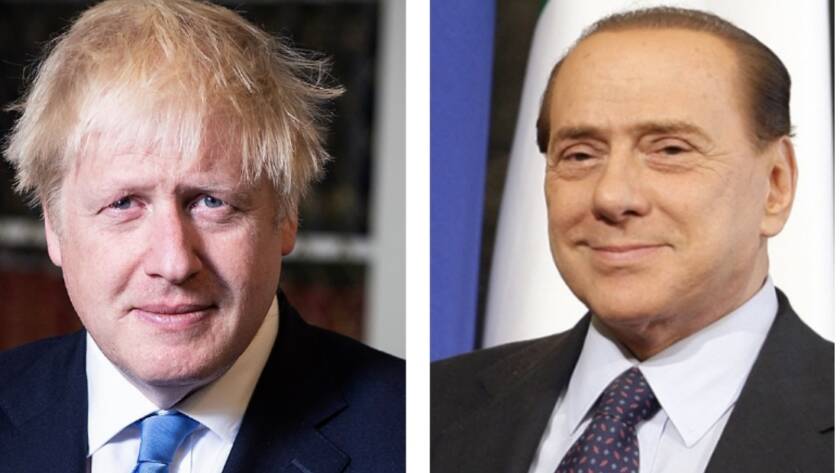
        The first was Silvio Berlusconi. Much like Boris he presented himself as a disruptor, there to shake up the system for the people’s benefit. This was a big fat lie. Berlusconi was a product of the sleazy clientilismo embedded in Italian politics since WW2. It was how he made his money; its collapse as a result of ferocious magistrates threatened his gains. He lost his protector in the anti-corruption trials and went into politics for one reason only: to protect his personal interests. His great skill – like Boris – was to persuade voters that he was there to help them. He wasn’t; he didn’t. Despite Italian voters’ desperation for change, Berlusconi squandered the best opportunity Italy had to make reforms to its economy and politics. Worse: he sought to undermine those bodies, laws and structures which sustain democracy and good governance, both public and private. The years since have been a carousel of externally imposed unelected technocrats and implausible and ineffective populists. It’s a country that survives despite its political class but which could be so much more if the public realm and those in charge of it at least tried to act with competence and integrity.

        So to Boris. In July 2020 I wrote this: “Johnson likes to be loved but he likes being feared even more. This can get you far in politics, indeed had got him to the top. When that loves fades and the fear goes – and they will, one day – his fall will be worth watching.

        Indeed it has.

        The scathing Privileges Committee report – scathing about his lies, his contempt for Parliament, for the process, for the very idea of being held to account – is the inevitable consequence for a man who lied as easily as he breathed. What is worse is the way he – and his supporters – sought to undermine the very process which found him to have misled Parliament. This has gone beyond a simple disagreement with the outcome. Tribunals, committees, judges can get things wrong. Sometimes a decision depends on a difficult finely balanced judgment with which others may legitimately disagree. There are appeals processes. But, ultimately, once the process has been concluded you have to accept it. The tantrum of Boris and co., is not the cry of someone claiming a miscarriage of justice with evidence to support this. It is the wail of a man who thinks he simply should not be held to any sort of account at all, who thinks processes and procedures standing in his way simply do not matter, should be ignored, attacked and undermined, a man who does not understand the harm this does to democracy. 

        It is not just elections which make a country democratic: it is also the structures and processes in place which subject rulers to the law, hold them to account, establish independent bodies and systems of investigation and justice, understand the vital importance of separation of powers, make it clear that the system is bigger than any one party, any one politician, value integrity and trust and seek to embed these in its governance. It is the job of all democratic politicians to pass those structures and processes on in good order for those coming after, to realise that they are not owners but custodians, that they are – as John Nott was bluntly told – “here today, gone tomorrow” politicians and that our democracy, our state and the means by which they work – or try to – with some level of competence, trust and integrity matter far more than they do. 

        Boris understands none of this. Nor do his supporters. In attacking the Committee, they are harming the democracy and country they claim to love. They are treating it with the same disdain that Berlusconi exhibited in Italy. They do so because they value Boris’s personal interests more than anything else. It is what happens when a party becomes dominated by one outsize personality and thinks the party and leader are one. Pretty soon it starts to think the party, leader and state are also all one – and saying otherwise is lèse-majesté. There is more than a hint of this in the reaction to the Committee’s report. It is one of the best reasons why the Tory party needs to go into opposition – to remind itself that its interests and the country’s are not automatically one and the same, that how its leader and MPs behave matters. 

        So to Scotland where Humza Yousaf has, bizarrely, told his MSPs that they must stand behind Nicola Sturgeon or leave the party. What on earth is he thinking? Is he thinking? Police Scotland arrested and questioned Ms Sturgeon (a once dominant politician in the SNP and Scotland) because they had “reasonable grounds for suspecting” she had committed a criminal offence – see S.1(1) of the Criminal Justice (Scotland) Act 2016. She was not questioned simply to make her evidence admissible. That is a pretty serious state of affairs. Ms Sturgeon has not been charged; she may never be and, even if she is, is entitled to the presumption of innocence. Nonetheless, this is a live independent investigation into potentially serious offences. The FM should not be commenting at all. He should not be demanding his MSPs stand behind their former leader or leave. This should not be some sort of “If you’re not with me, you’re against me” test. It risks putting pressure on the police, especially one which has just appointed its new leader and in a country where the SNP is so dominant. For now, anyway. Above all, it creates the impression that he does not understand the value of an independent investigation by an independent police force nor the need for the FM to be scrupulously neutral and not be seen to be taking sides. The SNP should be more than one politician. It is no answer to say, as Mr Yousaf has done, that he was trying to rally all his party around independence. Ends and means, Mr Yousaf. This is the same excuse Boris is giving: he’s being attacked over Brexit. To protect it , he must not be attacked. This is laughable l’état, c’est moi territory and it demeans the politicians and parties talking like this.

        Starmer is doubtless watching with glee. He should be careful. His decision to elevate Tom Watson to the legislature was a serious misjudgment, especially for an ex-DPP. Nominating someone who sought to manipulate the criminal justice system and the police for party political ends was shameful. We must hope that he does not make similar misjudgments in future. If he becomes PM there is plenty to repair in Britain. Not least of those is our democratic polity which has been so damaged by the current government. It is not constitutional change which is primarily needed but the understanding – followed by action – that trust, integrity and good judgment must govern the actions of everyone from the PM down. It may not be top of voters’ day to day concerns but, as the example of Italy shows: if the structure of the state is rotten and untrustworthy, if those in charge of it are untrustworthy and behave badly, then a country and its people will achieve less than otherwise. Britain can no longer afford the luxury of selfish, untrustworthy, thoughtless politicians.

        Leave a comment

        Why This Fight? Why Now?

        It is quite something for a government to challenge via judicial review the use of legal powers exercised by an inquiry it set up, run by a judge it appointed, with terms of reference it drafted. 

        Why? Two broad reasons: 

        (1) The need not to impede good governance (do stop laughing) by disclosing Ministerial/civil service communications which the government thinks irrelevant.

        (2) Concerns about personal communications and the private life of governmental witnesses. This latter point features quite strongly in the grounds drafted by the government’s counsel (here) with references to Article 8 of the ECHR. (Yes, that stench of governmental hypocrisy is a bit much but the spectacle is enjoyable so let’s wrinkle our noses and keep watching). 

        For all of Sir James Eadie KC’s lengthy analysis, this is a straightforward fight about power: who / whom. Who should determine whether evidence is or is not potentially or actually relevant to the matters the inquiry has been asked to consider? The inquiry judge thinks, under the powers granted to her by statute, she should decide. (The questions of what gets disclosed let alone what gets published are for later. This fight is just about the first stage – what gets produced.) The government thinks its witnesses (and government lawyers) should decide whether or not their material should be produced. That this creates an obvious conflict of interest for them seems not to trouble it. There again, the recognition – let alone avoidance – of conflicts of interests has never even entered this government’s head these last 4 years. That the relevant legal provision (S.21(4)(b) of the Inquiries Act 2005) says that it is the Inquiry Chair who decides, if a person objects to production, also seems not to trouble the government. Nor that they have to consider “the public interest in the information in question being obtained by the inquiry” (S.21(5)). Those pesky laws, eh!

        The first reason can be dismissed quickly. There are a number of current inquiries (the Post Office, blood contamination, Grenfell) which have released the embarrassing communications of Ministers and civil servants. The government has not sought to prevent those. Nor did it try to stop Mr Hancock from releasing Ministerial and civil servant WhatsApp messages for his private benefit. 

        The second is more interesting and revealing. Most inquiries relate to what Ministers did or did not do qua Ministers. Covid was different. The disease affected or potentially affected every single person in the country from the sovereign down. The actions taken affected every single person in the country from the sovereign down, every business and organization and, crucially, both the public and private conduct of Ministers and civil servants. The restrictions imposed were an unprecedented (in peacetime) assault on our freedoms and private lives, an assault carried out (as I argued here) in an “arbitrary, cavalier, confusing and oppressive way” with little or no scrutiny, Parliamentary or judicial. As a result, there was not much of a private life left, one in which we could decide who to see and when, even in our own homes. Families were split up. A large part of our private life was criminalised. Did Ministers and staff also follow these rules? Did they understand them? Did they realise they applied to them too? Did they try to obey them? Or did they think that rules, laws and guidelines are something which they do to others? 

        How convenient it would be for government to argue that a concern for the privacy of Ministers and civil servants should prevent voters from learning exactly how these restrictions were arrived at and their own attitude to and compliance with them? More widely, how convenient it would be for governments in future to be able to use the “right to a private life” excuse as a way of limiting inquiries into the conduct of those in government, whether elected or not. 

        There are two consistent threads underpinning everything the government has done since 2019. The first is a l’etat c’est moi approach to government, a belief that rules are for the little people and important people should be allowed to behave as they see fit. “We are not all in it together” is its motto. 

        The second is executive aggrandisement. Its attacks on judicial review, on judges, its disdain for proper Parliamentary scrutiny, Ministers’ refusal to attend Select Committees, its preference for rule by Ministerial decree, its curbs on the right to protest, its weakening of independent bodies such as the Electoral Commission, its hokey cokey with human rights – all of these show an executive determined to accrue ever more power to itself, weaken the powers of independent bodies and limit or abolish the ability of others to scrutinise, challenge and hold it accountable. Seeking to prevent the inquiry head from determining what material is relevant to an inquiry into how and why the government criminalised a large part of our lives by claiming this infringes the private lives of Ministers and civil servants shows some chutzpah. But it is also entirely in keeping with how this government has always acted. 

        Whether Johnson is also playing a game of his own – from reported outrage a few weeks ago at private details being revealed to total insouciance now and a desire to give everything (apart from the material he conveniently no longer has for 15 crucial months) – is a secondary, if entertaining, diversion. Doubtless if the government’s challenge succeeds, we shall see him using this in his long battle with the Parliamentary Standards Committee. And if not – and it is revealed that pretty much everyone in government and the civil service was ignoring or contemptuous of the rules imposed on us – well, Boris won’t look so bad and he’ll have revenged himself on those ousting him.

        Executive aggrandisement. That’s what the Tories are for. “Vote for us and we’ll take back control. From you.” Unlikely to appear on a bus any time soon. But accurate nonetheless.

        6 July

        The judgment dismissing the government’s challenge can be read here.

        Photo by Henry Be on Unsplash

        Leave a comment

        The Long Grass


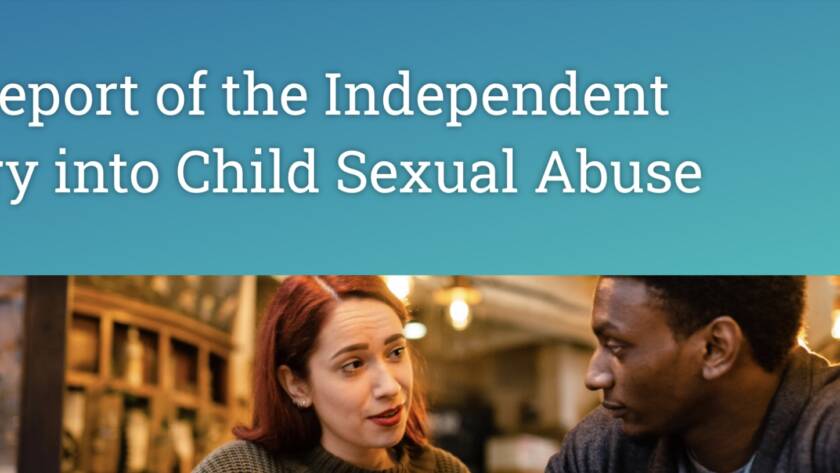
        There were two Braverman statements on Monday 22 May in the Commons. Only one of them really matters and it is not the one which has so exercised the commentariat. It is the Home Office’s formal response to the final report of IICSA and its 20 recommendations for an effective and comprehensive system for the protection of children from what the inquiry chair described as a “national epidemic” of abuse. The Inquiry was set up in March 2015 by Mrs May following evidence that many institutions were not just failing to protect children from sexual abuse but were actively dangerous for them. It produced 52 reports on a range of bodies: churches, local authorities, schools, care homes, sports bodies and so on. No body could be assumed to be safe for children, not even those set up to help them. The scale of the evidence taken is staggering: over 6,000 victims, 725 witnesses and 325 public hearings. The final report was published in October 2022. The government had 7 months to consider the recommendations and prepare its response. On Monday Suella came to the Commons to say what the government would now do.

        And what is that action? Well, not very much frankly. Much like Braverman’s statement to the House, it amounts to no more than a lot of well-crafted platitudes, promises to think about some of the recommendations, consider them, go out to consultation, accept some others “in principle” but subject them to more “assessment” so that we can have more evidence taking, reviews, talking, words and waffle. But of actual action and implementation of the recommendations, there is precious little sign. Were seven and half years and IICSA’s extensive research and evidence not sufficient then? Apparently not.

        The government has not accepted all the recommendations or has watered them down. It has not even implemented the recommendations from previous reports. 

        • Take the recommendation to have a dedicated Minister for Children: this was rejected, the existence of the Education Secretary being deemed sufficient. We have had 10 Education Secretaries in 13 years (5 in the last year alone) with such luminaries as Gavin Williamson and Nadim Zahawi in the role. How can this department possibly focus properly on the prevention of child sexual abuse? 
        • What of the Child Protection Authority? No – more thinking needed. 
        • The same with the proposal for a redress scheme and therapy for the victims. 
        • Even the proposal to ban “pain compliance techniques” has been rejected because these can be used properly if the appropriate procedures are in place. Of course they can.

        It is a dismal response to what has been – and continues to be – a serious problem, one of the worst crimes to be perpetrated – and against one of the weakest and most vulnerable groups in our society. Little wonder that IICSA’s Chair and the Victims and Survivors’ Consultative Panel expressed their “deep disappointment” saying that the government’s response “will not provide the protection from sexual abuse that our children deserve.” Sarah Champion MP could not contain her fury in the Commons saying that “accepting the need to act isn’t the same as acting”. That sums up this government’s approach to pretty much everything. It behaves like a passer-by at the scene of an accident, wringing his hands while stating how ghastly it all is. Does it not understand that it is in power, has a majority and can not only act but is actually expected to do so?

        There have been a large number of inquiries into misbehaviour in recent years. Pretty much all of them have been an exercise in kicking embarrassing stories into the long grass until everyone concerned has died or given up and the politicians/administrators responsible have moved on, with the occasional token face-saving exercise to create the illusion of action. That is pretty much what will happen to those still continuing: the one on the blood contamination scandal, for instance, due to report this autumn. Or the Post Office one. It is what will likely happen to the latest police reports, though the Met deserves some sort of medal for ensuring that, on the day the Mayor announces the establishment of a London Policing Board (to which “Londoners with diverse lived experiences” – as opposed to those unlived ones – are invited to apply), the first police officer to be disciplined (rightly) in relation to its failings over Wayne Couzens is a woman. (Her actions – failing to investigate properly his indecent exposure at a fast food outlet shortly before his murderous crime then lying about it – were hugely unprofessional. As were the failures of those who hired him, failed to do proper due diligence, failed to act on previous red flags, failed to investigate previous sexual allegations against him and promoted him during the previous three years. Shall we take bets on how many of them get disciplined equally severely?)

        What makes this inaction by the Home Office so contemptible is the contrast with the way politicians jump on these issues when they think it makes them look good or if they can attack an opponent. Suella Braverman did just that with her recent comments on grooming gangs and ethnicity, claiming that it was political correctness which prevented action. And yet when given the opportunity to act her department does little or nothing. Starmer’s response was to elevate to the Lords a man who used false child abuse allegations to attack political opponents. An error of judgment by anyone but truly appalling coming from an ex-DPP.

        Rishi Sunak likes to talk about “our precious children”. Yes, they are precious. They depend on us to do right by them. They are our offering to the future. They deserve better than this.

        Leave a comment

        Whose free speech?


        Let’s imagine a scenario:-

        • Take a well-known transgender (male to female) writer with many books to her name. She is learned, interesting and eloquent, particularly on gender ideology, which she supports and thinks useful to an understanding of human personality and sexuality. She has firmly expressed views that men can become women and the category of “woman” should be more fluid than has conventionally been the case. She has supported campaigns to alter various legal definitions to enable this. She has also stated that she does not wish to see a diminution in women’s existing legal rights.
        • She accepts an invitation from a venue – let’s call it “The Forum” – to be interviewed in a series on “Women in the Public Eye” as part of the annual literary festival in the city where The Forum is located.
        • The interviews are publicised.
        • Some of The Forum’s staff claim to be upset at this writer’s inclusion. They disagree – strongly – with her views. They consider her a misogynist. Some even describe her as a “destroyer of women’s rights”. They say they would feel “upset” and “unsafe” if she were to attend. 
        • They make their views known to the management of the venue. (It is unclear how representative of all the staff they are or whether the venue’s management seeks to canvas the views of other staff. Nor is it known whether the venue sought to make alternative staffing arrangements so that the staff who did not wish to work at this event could be – temporarily – replaced.)
        • The Forum announces the cancellation of its invitation. It says publicly that this is because their staff object to this writer’s views and pro-gender beliefs and that the venue has an obligation to consider the feelings and safety of its staff. So the event will not go ahead.
        • The writer is upset. She points out in public statements that the reason given for cancellation discriminates against her because of her belief in gender and that this is a breach of the laws prohibiting such discrimination. The Forum maintains its stance.
        • No politicians come to her defence, not even those in the party she has supported, voted and campaigned for and donated to, nor the politician in that party who is a part-owner of The Forum. Some even complain that they are being expected to answer questions about the issue as if it were all a terrible impertinence and inconvenience.
        • Following the provision of detailed legal advice to the writer which she shares with The Forum (and its own legal advice) the venue backs down, accepts that it unlawfully discriminated, offers an unreserved apology and reinstates the event.

        We do not need to imagine this scenario. It is pretty much what has occurred in relation to the invitation made by The Stand in Edinburgh to Joanna Cherry MP, KC, an invitation cancelled after its staff objected to her presence on the grounds that her views made her, in their words, “transphobic” and therefore they would feel “unsafe” if she were to attend. It has been reinstated following legal advice obtained by Ms Cherry and The Stand. The only difference is that, in the imaginary scenario, the views deemed unacceptable are the opposite of those expressed by Ms Cherry.

        It goes without saying that the imaginary scenario above is a clear example of discrimination on the grounds of belief, a protected characteristic under the 2010 Equality Act. It is wrong. It should not happen. Saying this and opposing what the hypothetical venue has done should not – and does not – depend on agreeing with the views of the transgender writer (or anyone else to whom something like this happens).

        However, if such a scenario happened, it is pretty much a racing certainty that those applauding The Stand for taking the steps it took (and, in the cases of some, deploring its climb-down) because they object to Joanna Cherry’s views on transgender/women’s rights issues would be outraged at the same thing happening to someone whose views they agreed with. People’s views on free speech do not, it seems, flow from any clearly enunciated and consistent principles. Nor do they pay any regard to the law. For far too many, speech should only be free, should only be permitted if it is speech they agree with. 

        This is not an issue which started with the women’s rights/trans rights debate. It has been around for centuries – see the arguments in the Christian churches with heretical sects. Or the Puritans. More recently, we saw it with the Rushdie fatwa when, surprisingly, a lot of people one might have expected to have spoken up for a writer in a Western country threatened with a religiously-mandated death by a cleric in a foreign country, a threat supported by many of the writer’s fellow citizens, sought to justify or explain away the threats by claiming that “offence” had been caused by the writer, that those so offended came from a different “culture” and that culture and religion must be respected. It was a dismal sight. It might have had the virtue of honesty if those making these specious claims had admitted they were scared and did not wish to be threatened with death either. 

        The whole wretched episode also introduced us to the suffix “phobic”, which could be handily attached to whatever belief or category of people needed to be rendered beyond challenge. A new sacred caste could be created and those objecting cast as “phobics”, the 21st century’s version of “heretic”. How marvellously convenient!

        The pusillanimous, cowardly reaction manifested itself repeatedly in the decades that followed – over Danish cartoons, the Charlie Hebdo cartoons, a play depicting murder and rape in a Sikh temple and so on. It has been displayed by politicians, publishers, newspapers, theatre directors, gallery directors, academics and many others. Seeking to shut down those with gender critical views is only the latest iteration. It will not be the last.

        There have been common themes in the reactions: an admission (often shame-faced) that what has happened is censorship but that the safety of staff and audiences and others is more important. Lately, there has been a refusal even to admit to any censorship. Rather, the focus is only on the “suffering” endured by staff or whichever group is complaining, their “safety” and the overriding obligation to avoid giving “offence” to them. Those who object to censorship or point out what the law requires are described as “phobics” or “bigots thus making it, at least in the minds of those doing it, wholly unnecessary to engage with their arguments and views, listen to them or pay any attention to the law’s requirements.

        What all the different objections over the years amount to – whether described as “blasphemy” (Mary Whitehouse’s objection to the Kirkup poem) or “hurt” and “offence” to a religion (Muslim objections to The Satanic Verses or Sikh objections to plays criticising them) or “feeling unsafe” or as “phobic” or “bigotry” – is no more than “I do not want to hear opinions I disagree with”. Sometimes, it is grudgingly accepted that people might be allowed to believe such things but should certainly not be allowed to express them in public. It is said that no-one has a right to a platform. True. But it conveniently misses the point that the platform does have obligations to comply with UK anti-discrimination and equality laws. It also ignores the fact that it is not simply freedom of belief which is protected but freedom of expression also.

        What is also noticeable is the almost total disregard for what the law says on the topic, despite the endless focus on the “human rights” of those who are upset. The European Court of Human Rights in Handyside v The United Kingdom set out very clearly what the principles of free speech and free expression mean.

        The Court’s supervisory functions oblige it to pay the utmost attention to the principles characterising a “democratic society”. Freedom of expression constitutes one of the essential foundations of such a society, one of the basic conditions for its progress and for the development of every man. Subject to paragraph 2 of Article 10 (art. 10-2), it is applicable not only to “information” or “ideas that are favourably received or regarded as inoffensive or as a matter of indifference, but also to those that offend, shock or disturb the State or any sector of the population. Such are the demands of that pluralism, tolerance and broadmindedness without which there is no “democratic society”.” [Emphasis added]

        What this latest incident shows is that these principles – and the laws enacted to make the principles a reality – are not really valued as they should be. Most worryingly, they do not appear to be valued by politicians. When laws specifically passed to enable equality and freedom from discrimination are disregarded by politicians (especially self-proclaimed progressives), little wonder that others disregard them also.

        There are two immediate consequences of this:

        (1) People have to constantly go to law to enforce their rights (as Ms Cherry had to do). It is worth noting that there have been at least 5 previous cases on unlawful discrimination on the grounds of belief, 3 of them in Scotland. So the idea that the law on this was unclear and that there were no precedents for the venue is not true.

        (2) Even when they win, those legal decisions are often ignored or misconstrued, whether deliberately or out of ignorance (as with the Forstater decision).

        What we are also now getting are claims that using the law to enforce one’s rights or to prevent unlawful discrimination is a form of bullying. It is as if those doing it do not want some people to have rights – or these rights – at all. Universal human rights are not, apparently, meant to be universal at all. The other complaint is that requiring staff not to carry out or facilitate acts of unlawful discrimination is, somehow, a form of servitude, an absolutely intolerable imposition. What can also be expected are attempts to prevent lawful events from going ahead at all – not simply protests about them – the “heckler’s veto“, which can itself amount to unlawful discrimination (as recently happened at Edinburgh University).

        There is a more fundamental consequence too. If politicians will not support the law in situations which the law is specifically intended to address, it engenders a disrespect for the law as a way of balancing rights and enabling different groups in a society to live together peacefully. Additionally, it renders politicians increasingly irrelevant since their prime purpose is the enactment and administration of laws. What we risk getting instead is an arms race of people shrieking ever more loudly about their hurt feelings and the wickedness / bigotry of others, in the hope that if they shout loudly or behave menacingly enough they somehow “win” – a Tower of Babel of narcissistic “victims”. Emotion rather than critical thinking and law. Is that really what we want? It is a question those Scottish politicians so disinclined to address the Joanna Cherry/The Stand issue should ask themselves.

        Human rights – if they are to mean anything – have to apply to all humans, not just your friends. Legal rights – if they are to mean anything at all – have to apply to everyone falling within the category granted those rights. Legal rights – to be meaningful – have to be enforceable. Enforcing your rights is not bullying. To believe so is to believe in Potemkin rights, ones which exist in theory but not in reality. Politicians should not be afraid to say so.

        Above all, what those objecting to Cherry, Rushdie, cartoonists or others want is one set of approved opinions, those they agree with. Free speech for me but not for thee. But what this will soon become is free speech for no-one, not even me.

        Because what they refuse to understand is that if you do that you are not arguing for freedom at all. You are arguing for totalitarianism of thought and you are doing so because you think you are on the winning side. But, one day, you will not be on the winning side and then it will be you who will be shut down. And what will you say then, the laws and conventions to protect you having been cut down by you in your zeal to enforce your views on others?


        Photo by Markus Spiske on Unsplash

        Leave a comment

        Sentence first – verdict afterwards

        It is again time to review what the “intellectually challenged from the neck up” party (© Joanna Cherry) – or the SNP as it is usually known – is up to. Having finally found an auditor (though, rather embarrassingly for a pro-independence party, there was not one auditor anywhere in Scotland willing or able to take on the job) the Holyrood government has decided to reform the Scottish criminal justice system. In one of his previous roles as Justice Minister, the current First Minister introduced the Hate Crime and Public Order (Scotland) Act 2021 – an Act which very many groups have described as having a chilling effect on free speech, criminalising as it does expressions of opinion in the privacy of one’s home. It has proved so contentious that more than 2 years after being passed, it has yet to come into force. 

        What could possibly go wrong with the proposed Victims, Witnesses and Justice Reform (Scotland) Bill? Well, what could go wrong with it is precisely what Jolyon Maugham KC was complaining about recently, though so keen was he to show that the reason his project kept losing cases was because judges were put under pressure by the executive as they are in Turkey and Poland (rather than because his legal arguments were unsound), that he missed the very real issues posed by this Bill. Those issues are four-fold:

        1. The Bill undermines judicial independence

        How? It gives the Lord Justice General, a judge, the power to dismiss any judge sitting on the Sexual Offences Court for any or no reason and without any due – or any – process at all. This is the first time such a power has been given to any judge. Breathtaking in its scope, this undermines a judge’s security of tenure and, therefore, independence. How can a court consisting of judges appointed under these conditions be considered independent and impartial? If it isn’t then Article 6 of the ECHR which says that a defendant charged with a criminal offence has the right to a fair hearing by an independent and impartial tribunal is breached. If the Bill does breach the ECHR then – joy of joys! – it is not within the legislative competence of Holyrood. Westminster can once again wheel out S.35 of the Scotland Act and Holyrood has another grievance. Is this the real aim?

        2. Not a fair trial

        The Bill establishes a pilot for rape trials without a jury, a proposal put forward by Lady Dorrian, one of Scotland’s most senior judges. That pilot is set to be reviewed by the executive and its report submitted to Holyrood. Some rape trials will be treated as an experimental laboratory for policies which depart from long-standing principles of criminal justice in the UK. The Bill specifically states that one of the pilot’s objectives is “to consider the impact of single judge trials on outcomes.” In short, its aim is to increase convictions. Put that with the judges having no security of tenure and it is not hard to see the clear pressure judges will feel under to convict. 

        Ah – but will judges submit to such pressure? It is worth reading this Times article by Matthew Syed about how corruption develops. He refers to the “rule of reciprocity” to explain how even a small favour creates an obligation, often subconscious, to do a favour in return. It is pressure which those involved are not even aware of. When judges on a court are, effectively, employed at will and know that the executive is looking for convictions, how can we, how can the defendant be certain that this will not sway the judge’s decision even if they claims it won’t or didn’t? We can’t. Why would anyone charged with such a serious crime agree to be part of such a pilot? 

        3. The Alice in Wonderland approach

        Everyone wants rape offences to be properly investigated, the perpetrators tried and, if the evidence is strong enough, convicted. But the manner in which a conviction is arrived at matters as much as the result, more so in fact, because of the imperative to ensure a trial fair to the defendant who is, after all, innocent until proved guilty. Rape convictions are too low. But this is not because of the existence of juries. It is because the investigations are poor and the delays before trial too long. If you work back from the result you want, and remove all obstacles in the way, you are pretty much guaranteed to create an injustice. Rape is a huge injustice to women. You do not respond to that, however, by creating an injustice for those men charged with it. Two wrongs etc.,. This approach – working back from the result you want or are expecting because that is how you have set it up – is the same approach which led to the Post Office’s Horizon scandal. It does not become a good one simply because the subject is rape not fraud.

        4. The general does not explain the particular

        The justification for the pilot is to enable judges to decide on the evidence without falling prey for various rape myths which juries are said to be prone to. The evidence for these myths affecting jurors is a pilot based on mock trials (not real ones). But the problem with this approach is that (a) it assumes judges will not also believe these myths; (b) they can be trained out of them – which adds strength to the argument that the pilot’s main purpose is to increase convictions, even at the expense of a fair trial; and (c) ignores the fact that in any individual case the actual evidence may well point to acquittal even if this looks to an outsider as if the jury was believing a myth. For instance, it may well be true as a generality to say that women do not make up allegations of rape or that a woman not fighting back does not mean she has consented. But you cannot say this in every single case. Defendants are not tried on generalities but on the specific evidence, on the individual facts and those facts may well point to an acquittal even if, to outsiders, it may look otherwise. 

        There has been a lot of criticism of this aspect of the Bill with many lawyers indicating that they will not act in such cases. So it remains to be seen whether this Bill will go forward unamended. It is not the first time, of course, that Holyrood has sought to get rid of juries. Ms Sturgeon tried it during Covid seeking an 18-month suspension of jury trials. Now a pilot is being used instead. What is it with our rulers that they keep on bringing back wretchedly illiberal proposals, time after time? It took 3 goes before Raab’s dreadful Bill of Rights Bill was dropped. How long will it be before progressive Scotland stops trying to be the Hungary of the British Isles?

        Photo by K. Mitch Hodge on Unsplash

        Leave a comment

        Joined Up Thinking?

        Following the conviction of Wayne Couzens for three offences of indecent exposure and his sentence to 19 months imprisonment (largely irrelevant given his life sentence for the rape and murder of Sarah Everard), on 7 March the Today programme interviewed four women about their experiences of indecent exposure.

        Three of the women (all in their twenties) were victims of this offence. The fourth was Dame Diana Johnson, Labour MP and Chair of the Home Affairs Select Committee, which is currently looking at Violence against Women and Girls.

        The key question

        Are women under constant pressure,” Justin Webb asked, “to simply accept exhibitionism and these forms of aggression?

        The victims

        What the three women said in reply is worth listening to. The full interview (12 minutes long) can be heard here. They describe instances of indecent exposure which happened to them in ordinary places at any time: the park, a busy London street, the tube. “Flashing” is the wrong word for what actually happens: a man dropping his trousers in front of women in the street, a man openly masturbating in the tube while looking at a woman, a man playing with his genitals and shouting at a woman.

        What do women feel when this happens? “So violated”. “Panicked” But above all, desperate to get out of the situation to somewhere safe. None of them saw any point in reporting what happened to the police or any other official because they would not “be taken seriously”. “Is anything going to come of it?” one of the women asked. A good question.

        All of them said that this behaviour was “quite normalised”. They were used to “sexual harassment”; they were not in a minority. This is true. I am no longer in my twenties. But what happened to these women has happened to me and every single woman I know. The first time a man exposed himself to me was in in the girls’ toilet of my local library. I was about 13. There were other instances too — in North London in broad daylight, walking home from church or going to school.

        As one of the women said:

        This is what happens to women. This is what has always happened. This is what will continue to happen.

        She is right. This is the answer to Justin Webb’s question. But this is not what ought to happen. All three felt that the stigma of these offences was on the woman; they felt blamed for it happening, for being in the wrong place at the wrong time. So they — like every other woman — learnt to endure it.

        The Labour MP

        So to Diana Johnson. Her interview was about how minor sexual offences were often a precursor to — and an indication of a propensity to commit — very serious sexual offences. A young woman in her constituency — Libby Squire — was kidnapped, raped and murdered by a man who for months beforehand had been exposing himself round town, had committed acts of voyeurism, which only came to light after he murdered Libby. She said that, too often such minor offences were laughed or joked about, were simply not taken seriously.

        And then Justin Webb asked another very good — and highly pertinent — question (by reference to Jordan Gray, a trans comedian, who exposed himself on a Channel 4 show):

        Whether the idea that people who don’t want to see the male body should be allowed not to is something that we’ve slightly lost?

        Diana’s answer goes to the heart of this issue:

        the male body can be used to intimidate, as an act of violence against women and girls”.

        It is not simply what a man does with his body which matters. Exposing, displaying his body is also an act of aggression, of violence. It induces, is intended to induce fear in women. And it is the male body which is being used in this act of aggression, not an identity or gender or a pronoun or anything else. No — the physical reality of a male body.

        That is what is being exposed, that is what a woman sees, that is what is being used to intimidate a woman. A male body.

        An act of violence

        Male genitalia is a source of pleasure to men. It is also a source of pleasure for women. But only in the right settings and only if it is wanted by the woman. What men perhaps do not understand in their bones is that what is only a source of joy for them can — for women — also be a weapon, a source of pain and harm and fear. A man’s strength can comfort and protect. But it can overwhelm and harm and kill. Male bodies can be frightening. Women — faced with an unwanted exposure of a male body, of a male exposing or playing with his genitals, faced with men behaving beyond the bounds of social convention, faced with men breaching women’s boundaries — have reason to fear such acts of aggression. Men — faced with an exposed or naked female body — may feel aroused by or indifferent to or disgusted. But they have no reason to fear such a body.

        Little wonder that those three women interviewees said that their immediate reaction is to get away from, get out of the situation. This is why this is not — and should not be seen as — a joking matter. Men who breach women’s boundaries with their bodies are behaving violently towards women even if they don’t touch her.

        So to another MP — a Lib Dem one

        Earlier in the programme (from about 7:14 am), Wera Hobhouse had been interviewed on the same topic. In February 2019 thanks to her efforts, upskirting became a criminal offence. She too was concerned at the disregard for sexual offences — 

        Where are we if these attacks on women continue to be normalised?

        She too wanted a “complete culture change” so that all sexual offences, however minor, were properly reported and investigated.

        Then this — 

        The traumatising effect that any of these offences have on women has been completely underestimated….. Women are deeply traumatised. It’s a proper offence. It leads to ultimately the feeling in women that they’re very vulnerable, that they’re not being listened to, ….that what they feel is a proper attack on them, their freedom, their liberty, their way of life is not seen as such.

        Oh, so very well said!

        Another question then

        But now a question for these MPs. If male bodies are used to intimidate, to violate, to make women feel unsafe, vulnerable, under attack, if breaching women’s boundaries are an act of aggression towards women, if sexual acts like these must not be ignored, if women are entitled not to suffer trauma and have their way of life attacked, then why are the parties to which these MPs belong so intent on making it easier for men to access women’s spaces and carry out these traumatising acts of violence?

        And why don’t these MPs speak up against such proposals? Little point legislating against upskirting if you then make it easier for a man to go into a woman’s changing room, after all.

        Would it be too much to expect these MPs to remember what they said — with such passion — when they are next faced with proposals from their parties which will create new opportunities for sexual predators to use their male bodies to intimidate women.

        It is not enough just to listen to women. It is not enough to get rightly outraged when a serial sexual offender is allowed to commit the worst of crimes. It is not enough to agree that women, forced to see male bodies when they don’t want to, are traumatised. All these words are lovely and true and welcome. But a bit of joined up thinking and action would be even better.

        Photo by Mihai Surdu on Unsplash

        Leave a comment